An AI-Assisted Intelligence Report Nearly Sent U.S. Forces After a Chinese Ship
A false report reportedly put military aircraft in the air and armed personnel on standby—bringing two nuclear powers dangerously close to a confrontation.
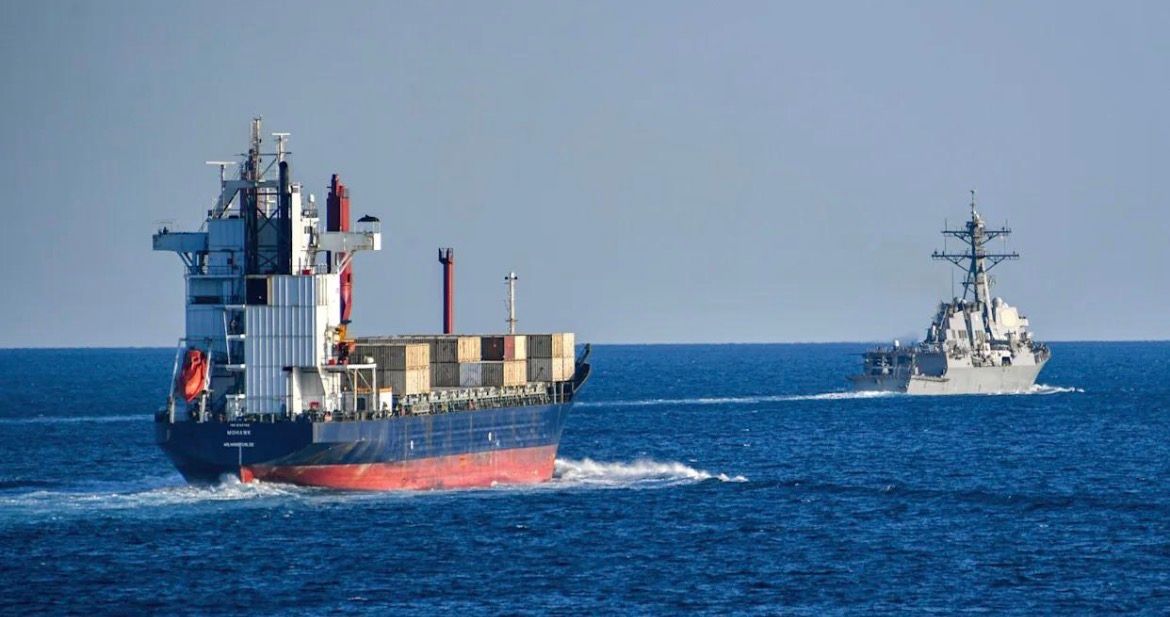
A false intelligence report produced with the help of an AI chatbot reportedly pushed the United States toward a military operation against a Chinese vessel during the war with Iran.
According to CNN’s reporting, the report claimed that a Chinese ship operating in the Middle East was carrying components connected to a nuclear weapons program.
The U.S. military began preparing to intercept it.
Armed personnel were reportedly getting ready to board the Chinese vessel. Military aircraft were already in the air. An operation involving American forces and a ship belonging to another nuclear-armed country was moving dangerously close to becoming real.
There was just one enormous problem: the intelligence was false.
Officials reportedly discovered before the interception that an analyst had relied on an AI chatbot that misidentified the ship’s cargo. One source described the resulting intelligence report as “entirely false.”
Another said the incident “almost started a war.”
That is not dramatic language for clicks. If armed American personnel had boarded a Chinese vessel based on false intelligence, China could have viewed it as an act of aggression. A single AI-generated error—combined with a failure by humans to properly verify it—could have triggered a direct confrontation between the United States and China.
The failure was bigger than one chatbot
The easiest response would be to blame artificial intelligence and stop there.
But an AI chatbot cannot order military aircraft into the sky. It cannot deploy armed personnel or authorize the boarding of a foreign vessel. Human beings and the systems surrounding them allowed unverified information to travel far enough through the military chain of command that preparations for an actual operation reportedly began.
That means this was not simply an AI failure. It was an intelligence failure, a verification failure and a failure of military safeguards.
AI systems can produce information that sounds authoritative even when it is completely wrong. The technology does not necessarily distinguish between confirmed intelligence, incomplete data and a convincing fabrication. It generates an answer based on patterns—not certainty.
That danger becomes considerably more serious when the answer is entering a system capable of deploying weapons and starting wars.
The question is no longer whether the military should use AI. That is already happening. The question is why information produced with AI assistance was apparently able to influence operational planning without being independently verified first.
We came dangerously close to learning the worst possible lesson
This incident reportedly happened during an active war with Iran, when tensions were already high and officials were making decisions under enormous pressure.
Those are exactly the conditions in which false information becomes most dangerous.
During a crisis, governments have less time to investigate intelligence, military commanders face pressure to act quickly and every movement can be interpreted as a threat. Adding unreliable AI-generated information to that environment creates a new path toward accidental escalation.
A hallucinated answer in an ordinary chatbot conversation can be frustrating. A hallucinated answer inside a military intelligence report can get people killed.
The fact that the operation was reportedly stopped does not mean the system worked. It means somebody caught the failure before it became irreversible.
Next time, they may not.
Experts are already demanding international safeguards
The report arrives as American and Chinese security experts are calling for stronger protections governing military uses of artificial intelligence.
Their proposals reportedly include keeping humans in control of consequential military decisions, prohibiting AI systems from independently making decisions involving nuclear weapons and establishing a direct U.S.–China hotline for emergencies involving AI.
Those protections are not abstract concerns about some distant technological future. This incident demonstrates why they may already be necessary.
The United States and China need clear rules requiring multiple layers of human verification before AI-assisted information can be used to justify military action. Congress also needs to investigate how this report was produced, how far it traveled and why existing review procedures did not immediately catch the error.
The public deserves answers:
Who used the chatbot?
What information was entered into it?
Which AI system produced the false identification?
How did that information become part of an intelligence report?
Who reviewed it before aircraft and armed personnel were reportedly mobilized?
And what has been changed to prevent this from happening again?
This cannot disappear into the news cycle
Government officials will likely describe this as a lesson learned or proof that safeguards ultimately succeeded.
That is not enough.
Two nuclear powers reportedly moved closer to a military confrontation because false information generated with help from an AI chatbot made its way into the intelligence process. That should result in congressional hearings, public accountability and immediate restrictions on how generative AI can be used in national-security decisions.
We should not have to wait until an AI-assisted mistake actually starts a war before the government treats the danger seriously.
The nightmare scenario everyone keeps warning about is not necessarily an autonomous machine deciding to launch a weapon by itself. It may be something far more ordinary: an AI system confidently produces false information, people trust it and military machinery begins moving before anyone stops to confirm whether it is true.
According to CNN, that is exactly what nearly happened.
And the world may have come far closer to catastrophe than anyone knew.
Cup of Culture is independent journalism covering the stories that demand more than a headline. Support this work and join the free mailing list at https://cupofculture.news/subscribe/.