EXCLUSIVE: Brandi Kruse's Anti-Trans Sports Narrative Faces a Challenge From Within the Family She Amplified
As Kruse has given a platform to Aimee Staudt and her daughter, a relative of Staudt has publicly challenged her advocacy and pointed to the political organization paying her.
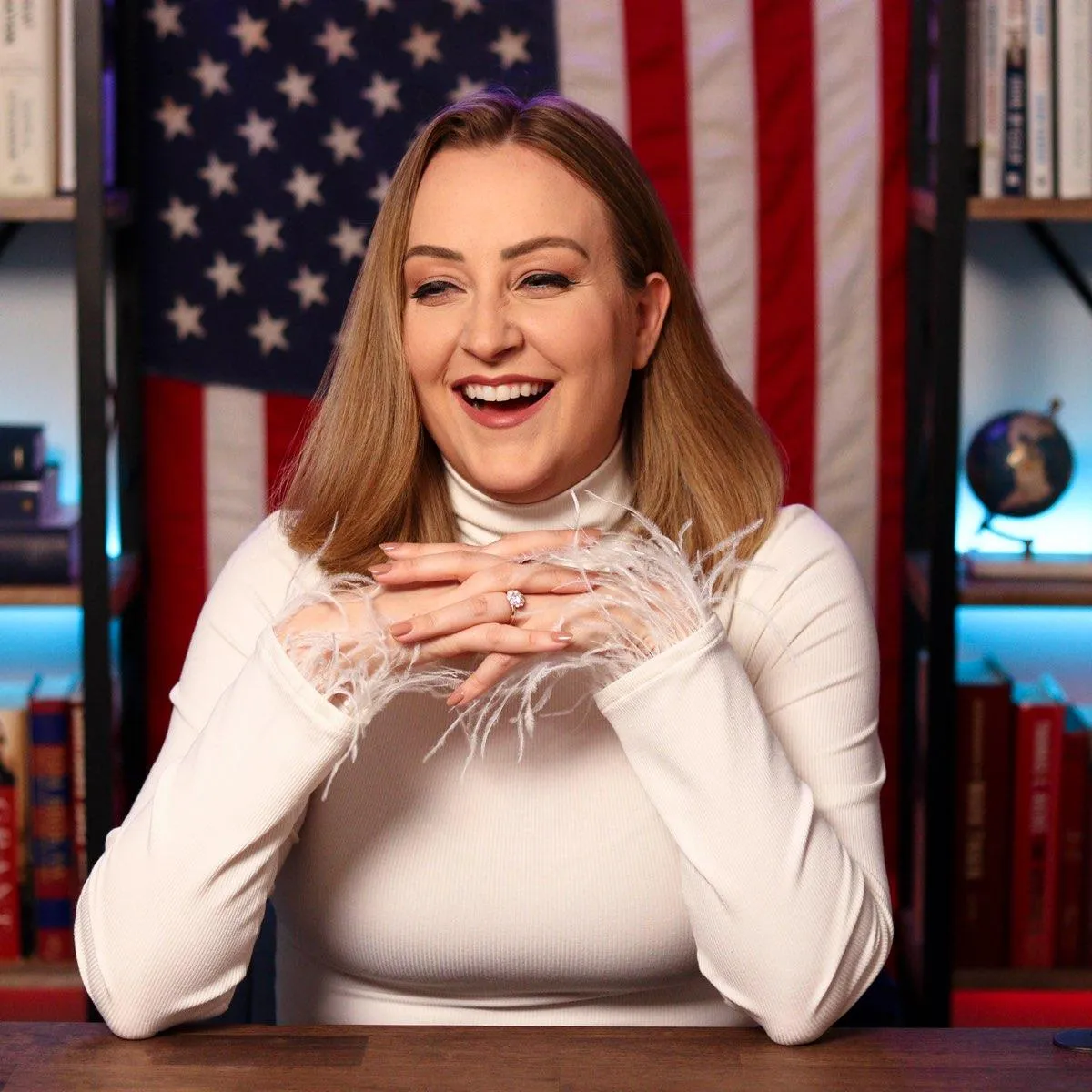
For months, conservative political commentator Brandi Kruse has helped bring the Staudt family's opposition to transgender girls participating in girls' sports to a wider Washington audience.
Now, a relative of the family at the center of that advocacy is speaking out.
In a public Facebook statement dated November 13, Kris Kachirisky identified Aimee Staudt as her cousin, described a deeply strained family relationship, and condemned Staudt's involvement in Washington's campaign to restrict transgender girls' participation in school athletics.
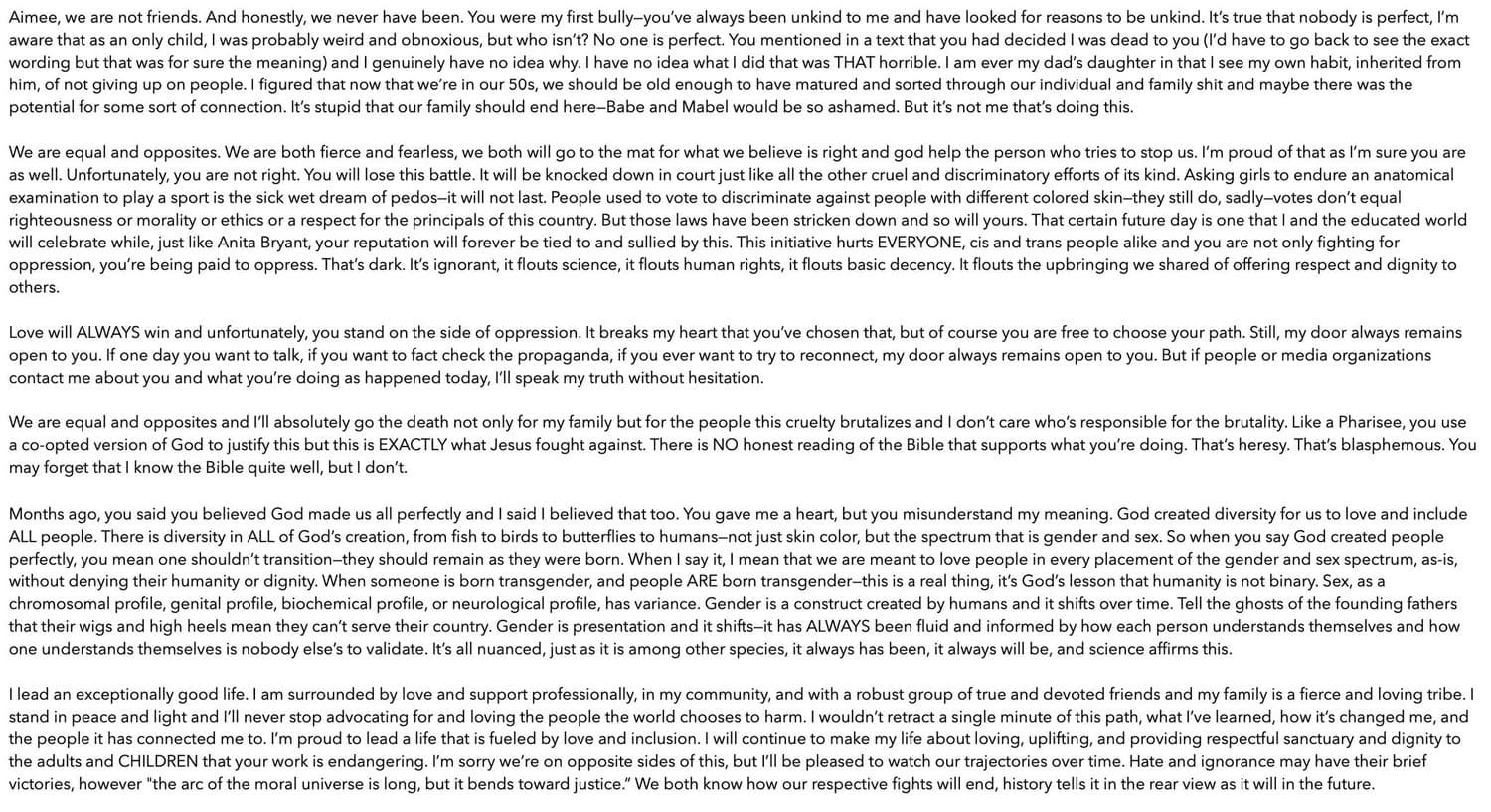
The statement introduces a personal dimension to a political campaign that has already drawn scrutiny over its funding, messaging, and relationship with influential media personalities.
It also raises questions about how Kruse has presented the Staudt family to her audience, and whether the perspectives of transgender people connected to that same extended family have received comparable attention.
A family member breaks her silence
Kachirisky's public statement begins with a personal revelation.
She identifies the mother featured in an October 5 Seattle Gay News investigation as her cousin, explaining that they grew up together and that she considered her cousin and her siblings almost like her own siblings.
Kachirisky then expresses distress over Staudt's reported employment with the organization behind Washington's effort to restrict transgender girls' participation in sports.
Her statement describes years of tension within the family, although the precise history and reasons for that estrangement have not been independently established by Cup of Culture.
According to information provided to Cup of Culture, Kachirisky has a transgender wife and daughter. That detail requires direct confirmation before it can be presented as independently verified reporting.
What is documented in the supplied Facebook statement is Kachirisky's explicit support for transgender girls and her criticism of the political campaign involving her cousin.
She writes about the importance of supporting young transgender athletes and ensuring they understand that they are valued.
Kachirisky also describes receiving a message from what she believed to be a fake Facebook profile that had found an older post in which she defended transgender girls' participation in sports.
She says that interaction prompted her to contact her cousin directly.
The identity of the account, its motivation, and any possible relationship to the political campaign remain unknown.
The money behind the advocacy
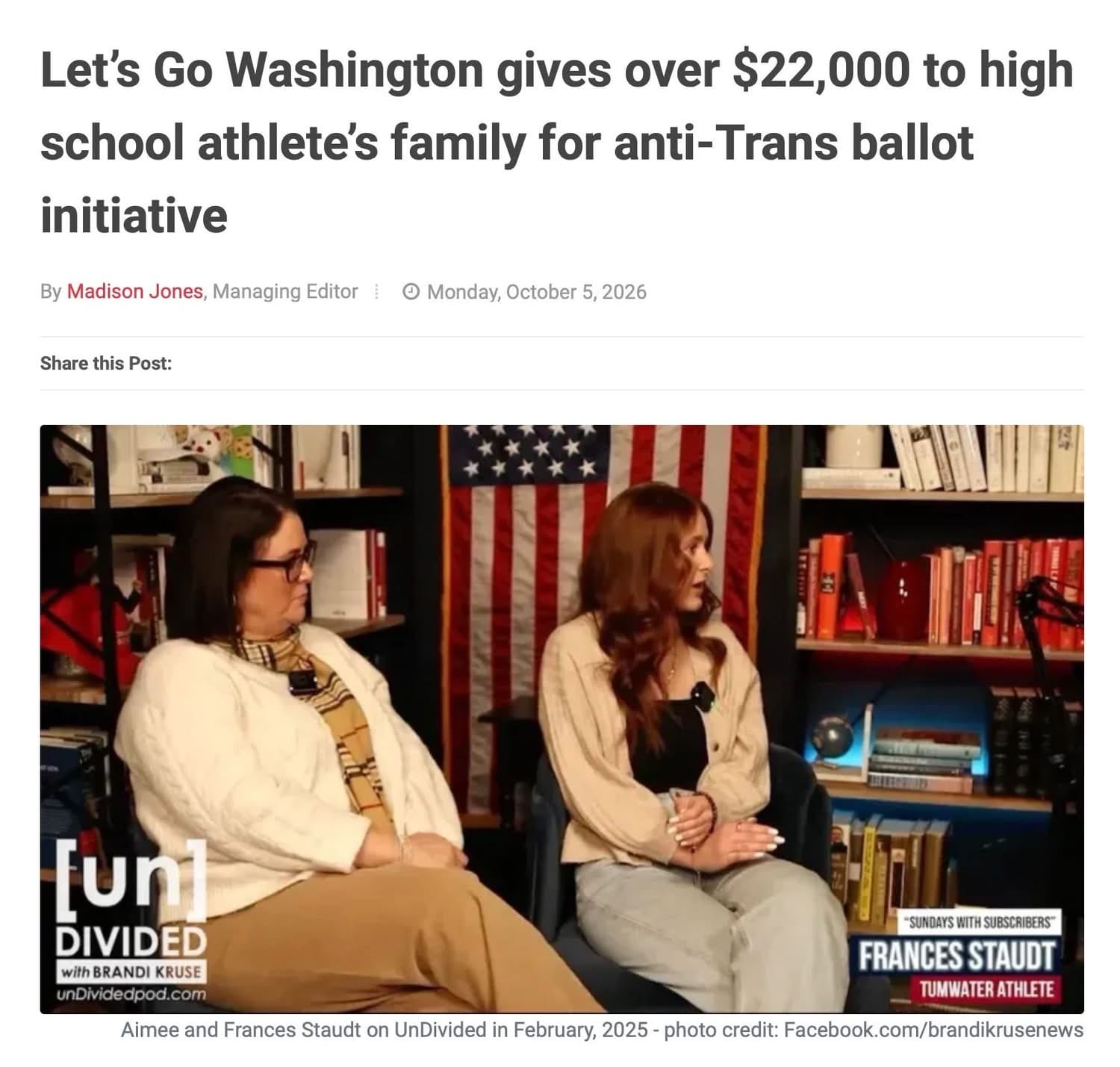
The family dispute is unfolding against a documented financial relationship between Aimee Staudt and Let's Go Washington.
An October 5 investigation by Seattle Gay News reported that Let's Go Washington had paid Staudt more than $22,000 between April and August 2026.
The organization confirmed that it had hired her as a development coordinator.
That distinction matters.
Staudt's participation in the political campaign was not solely that of an unpaid parent sharing a personal perspective. Reporting has established that she also held a paid position with an organization advancing the issue.
Employment by a political organization is not inherently improper. But that relationship is relevant context when audiences evaluate advocacy presented through interviews, campaign materials, and political commentary.
Where Brandi Kruse enters the story
Kruse has featured the Staudts through her political media platform, unDivided, bringing their arguments about transgender participation in girls' sports to her audience.
Her involvement places her at the intersection of media commentary and political advocacy.
The important question is not whether Kruse has the right to express an opinion. She does.
The question is how fully her audience understands the relationships, financial interests, and competing perspectives surrounding the people she promotes.
Kachirisky's public statement complicates the idea that the Staudt family's political advocacy represents an uncontested family perspective.
A relative who says she grew up alongside Aimee has now publicly challenged that advocacy and expressed concern about its consequences for transgender young people.
That does not establish that Kruse knew about the family disagreement or deliberately excluded it from her coverage.
It does, however, create an opportunity to examine how her platform has framed the controversy and which voices have been included.
A separate campaign-finance controversy
Kruse's relationship with Let's Go Washington has previously attracted regulatory attention.
A complaint alleged that her promotion of the organization's ballot initiatives constituted contributions that should have been disclosed.
Washington's Public Disclosure Commission dismissed the complaint in September 2026, finding insufficient evidence of undisclosed paid services or reportable contributions.
That outcome must be distinguished from the separately reported payments to Aimee Staudt.
The commission's dismissal does not establish misconduct by Kruse, nor does it prevent scrutiny of her editorial decisions or political advocacy.
The voices behind the political debate

The controversy over transgender participation in school sports is often framed around competing claims of fairness, inclusion, and opportunities for female athletes.
Supporters of restrictions argue that sex-based eligibility rules protect competitive fairness. Opponents argue that broad restrictions exclude transgender students from educational and athletic opportunities and can stigmatize a small, vulnerable population.
Kachirisky's statement brings that debate into the personal relationships of one of the campaign's prominent advocates.
She says she is speaking out both for people affected by the political campaign and for herself.
Her decision to publicly challenge a relative who has become involved in a statewide political effort underscores how the debate reaches beyond campaign messaging and into families and communities.
Questions that remain unanswered
Cup of Culture has not independently interviewed Kachirisky or established the full history of her relationship with Staudt.
The available materials also do not establish what Kruse knew about that relationship, whether she was aware of the November 13 statement, or whether she intends to address it.
Those questions matter because Kruse's role is not merely that of an observer. She is a commentator who has publicly engaged with and amplified the campaign's arguments.
The new family statement offers another perspective on the people and relationships at the center of that advocacy.
The larger story is about transparency.
When political campaigns elevate personal stories, audiences deserve to understand relevant financial relationships and to hear credible perspectives that challenge the campaign's framing.
Kachirisky has now put one such perspective into public view.
Whether Brandi Kruse chooses to address it remains an open question.
Cup of Culture is an independent newsroom covering politics, accountability, and the people affected by public policy.
Source material: Kris Kachirisky's November 13 public Facebook statement; Seattle Gay News investigation dated October 5, 2026; Washington Public Disclosure Commission records.