🚨Federal Agents Secretly Infiltrated Churches, Schools and Private Chats to Surveil Anti-ICE Organizers
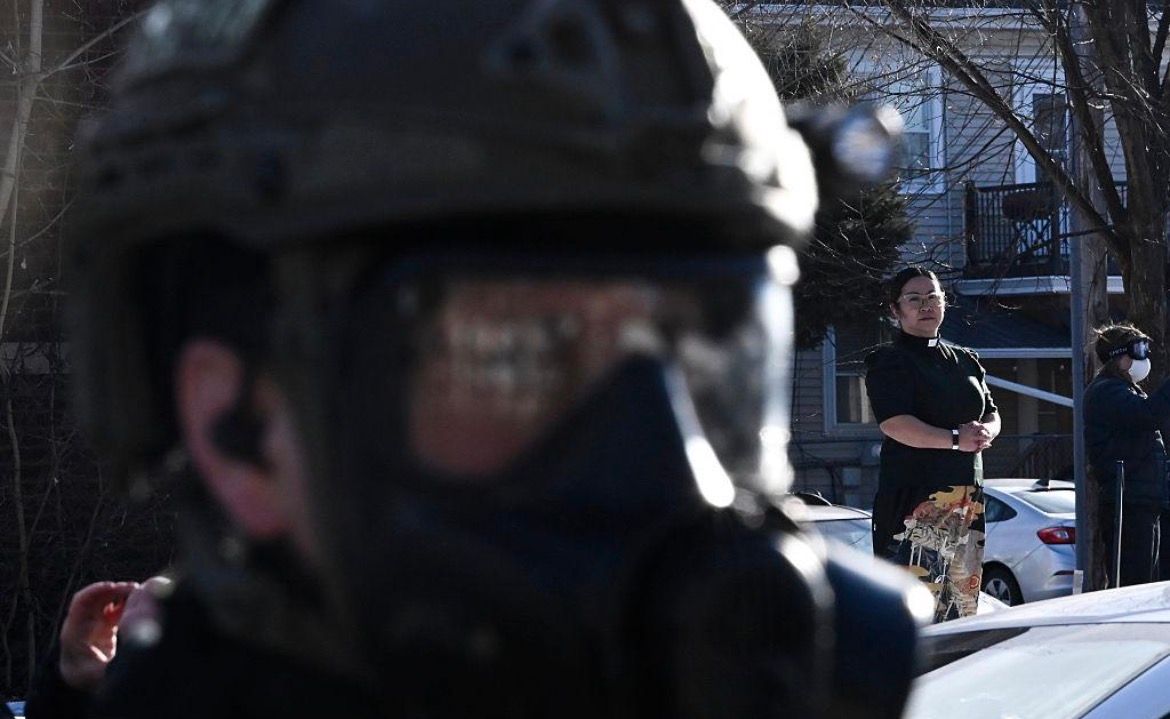
Newly disclosed court records reveal the extraordinary scope of a Department of Homeland Security surveillance operation in Minnesota, including undercover agents, secret recordings, license-plate tracking and monitoring of people who were never charged with crimes.
Federal immigration enforcement in Minnesota wasn’t happening only on the streets.
It was happening inside churches.
Inside libraries.
Inside schools.
Inside community meetings.
And inside private group chats.
Newly disclosed federal court records reveal that Department of Homeland Security agents conducted an extensive undercover surveillance operation during the Trump administration’s immigration crackdown in Minnesota, monitoring activists and organizations opposed to ICE.
The operation went far beyond watching protests from a distance.
Undercover agents attended meetings while posing as participants. They secretly recorded conversations. They photographed license plates. They infiltrated private Signal chats. They sought financial records belonging to unions and organizations.
And according to NPR’s review of the records, the government gathered information about community members who had not been accused of crimes.
An undercover agent walked into a church
At Prince of Peace Lutheran Church in Roseville, Minnesota, an undercover DHS agent attended a February meeting involving people opposed to ICE operations.
According to the court filings, the agent recorded license plates belonging to people attending the meeting.
Investigators then used that information to build dossiers containing names, addresses, employment information and details about people’s families.
The church wasn’t an isolated case.
Court records show federal agents secretly recorded or monitored gatherings at churches, libraries, restaurants, schools and other locations around the Twin Cities.
At University Baptist Church in Minneapolis, an undercover agent reportedly attended a self-defense class wearing a concealed recording device.
The surveillance of that church has raised an additional legal question because the building was covered by a federal court order restricting warrantless immigration enforcement at certain houses of worship.
They infiltrated private Signal chats
Federal agents also went undercover digitally.
Documents show agents entered private Signal conversations used by organizers.
One undercover identity reportedly used the username “peanutbutterjelly.”
According to court records, the agent didn’t simply sit silently inside the group.
The undercover operative offered to assist organizers with things including fundraising and protest materials.
At another meeting inside a public library, an undercover agent allegedly told someone that he had construction experience, could build things for more aggressive “direct action” and was willing to go to jail.
The offer was reportedly never accepted.
More than 200 pages of surveillance records
And we’re still learning how extensive this was.
A new court filing on August 25 contained more than 200 pages of undercover agents’ notes and photographs connected to DHS surveillance during Operation Metro Surge.
The records include photographs of vehicles belonging to people who followed immigration agents as well as documentation from undercover operations.
The broader investigation was known as Operation Puppet Master, according to federal records.
It ultimately became connected to the prosecution of 15 Minnesotans accused of conspiring to impede or injure federal officers.
Those criminal allegations are important context.
But they’re also exactly why the scope of this surveillance matters.
The government’s own records indicate its intelligence gathering extended beyond the people who were ultimately charged.
Unions and progressive organizations were swept into the investigation
Previously disclosed records show investigators also examined organizations associated with the broader anti-ICE movement.
Federal documents referenced labor unions and progressive organizations including the AFL-CIO, SEIU and Democratic Socialists of America.
None of those organizations were charged with crimes in connection with the investigation.
One government document shown to grand jurors reportedly depicted a network of 18 organizations under the heading “The Conspiracy.”
The government later said it was not alleging that those organizations themselves were members of the conspiracy.
But civil-liberties advocates say that distinction doesn’t erase the larger concern.
When the federal government infiltrates political meetings, records protesters’ vehicles, examines organizational finances and builds intelligence profiles around political activity, the obvious question becomes:
Is the government investigating crimes, or is it investigating a political movement?
DHS says these were legitimate investigative techniques
The government disputes the characterization that it indiscriminately targeted peaceful protesters.
Federal prosecutors have argued that investigators were pursuing people suspected of participating in a conspiracy to interfere with federal immigration officers.
The government has described the surveillance techniques revealed in the case as standard law-enforcement practices and argued that requests for certain financial records were within DHS’s legal authority.
And whether every individual surveillance tactic violated the law remains an unresolved question.
That distinction matters.
But legality isn’t the only issue here.
The First Amendment protects Americans’ rights to organize, associate, protest and criticize their government.
Government surveillance can chill those rights even when nobody is ultimately arrested.
Someone considering attending an anti-ICE meeting at their local church now has another question to consider:
Is the person sitting next to me a federal agent building a file on everyone in the room?
That is an extraordinary place for the United States to find itself.
The comparison to COINTELPRO is already being raised
Rachel Levinson-Waldman of the Brennan Center for Justice told NPR that the tactics reminded her of COINTELPRO, the infamous FBI domestic surveillance program that targeted political organizations and civil-rights leaders including Martin Luther King Jr.
That doesn’t mean the Minnesota operation and COINTELPRO are identical.
But the historical parallel explains why these revelations deserve national attention.
America has already experienced what happens when law-enforcement agencies begin treating political movements themselves as potential threats.
The reforms that followed weren’t created because surveillance technology disappeared.
They were created because unchecked political surveillance proved extraordinarily dangerous to a democratic society.
This story is bigger than Minnesota
This isn’t simply another story about ICE enforcement.
It’s a story about government power.
It’s about whether attending a protest meeting can put your license plate into a federal database.
It’s about whether participating in a private political group chat can mean unknowingly communicating with an undercover federal agent.
It’s about whether churches, libraries and schools can become intelligence-gathering locations because people inside them oppose government policy.
And it’s about where the line exists between investigating an actual crime and surveilling political dissent.
More records are now becoming public through the federal criminal case.
Congress, civil-liberties organizations and journalists should be demanding answers about exactly how far this operation reached, who authorized it, how many Americans were surveilled and what happened to the information the government collected.
Because Americans shouldn’t have to wonder whether walking into a church meeting criticizing their government means walking into a federal surveillance operation.
That should alarm every single one of us, regardless of our politics.