Federal Court Rulings and Legal Developments for Week Ending September 19th, 2026
Fifth Circuit Strikes Down Inter-State Handgun Sales Restrictions
On September 18, 2026, the Fifth Circuit Court of Appeals ruled in Elite Precision Customs v. ATF that the federal ban on direct out-of-state handgun purchases violates the Second Amendment.
The lawsuit was filed by the plaintiffs, Elite Precision Customs (a licensed gun dealer in Texas), along with the Firearms Policy Coalition. It claimed that their 2nd Amendment rights were infringed by a 1968 federal law that made it illegal for a federally licensed dealer to sell a handgun directly to a buyer who lives in a different state, therefore buyers had to ship the gun to a second dealer in their home state, adding extra fees and delays.
To summarize, an out-of-state gun dealer can now ship a weapon directly to a buyer without needing to go through a second dealer in the buyer's home state.
Second Circuit Upholds Warrantless Border Cell Phone Searches
On September 17, 2026, the Second Circuit ruled in United States v. Alisigwe that no warrant and not even any suspicion is needed to search a cell phone at the border. The case involves Chinwendu Alisigwe, a lawful permanent resident, who was suspected of engaging in fraud schemes. Alisigwe was stopped by border officials at JFK International Airport while returning to the United States from abroad, he was asked to unlock his phone and he complied. Border officials claimed to find evidence of fraud.
The ruling cited the precedent in United States v. Ramsey, 431 U.S. 606, 619 (1977), wherein the activity by border officials was categorically allowed and added that there was "longstanding recognition that searches at our borders without probable cause and without a warrant are nonetheless 'reasonable' has a history as old as the Fourth Amendment itself.”
The ruling continues, “Under our precedents, no suspicion is required before the government searches a traveler's property at the border. See United States v. Irving, 452 F.3d 110, 123 (2d Cir. 2006). Searches of property "are made reasonable by that person's decision to enter this country.’”
In short the manual searches of property, including cell phones, is considered legal in the eyes of the law. The legality of forensic searches that plug the device into extraction equipment to copy mass data has not been established by this court or their ruling.
Legal Battles and Protests Surrounding The Kennedy Center
On September 17, 2026 District Court Judge Christopher Cooper declined an emergency hearing request to review the board's closure vote, but issued a formal order requiring the government to provide 30 days' advance notice before executing any demolition or major physical alterations to the property.
This was after a long string of legal challenges starting in December 2025 when The Kennedy Center board voted to rename the building after President Donald Trump, and his name was added to the exterior. Trump had previously replaced a portion of the board with members that would be sympathetic to his cause.
In March 2026, Representative Joyce Beatty (D-Ohio), an ex officio member of the board, filed an amended complaint in federal court (Beatty v. Trump) challenging plans to close and potentially rebuild or demolish the center.
May 2026, Cooper ruled that Trump's name must be removed from the facility, stating federal law mandates it honor President Kennedy alone.
June 2026, Trump's name was removed from the building's facade.
August 13, 2026, The board approved a two-year closure of the building citing repairs and federal funding timelines.
September 16, 2026, The Kennedy Center closed abruptly to the public for a temporary 7-day assessment of severe structural deterioration.
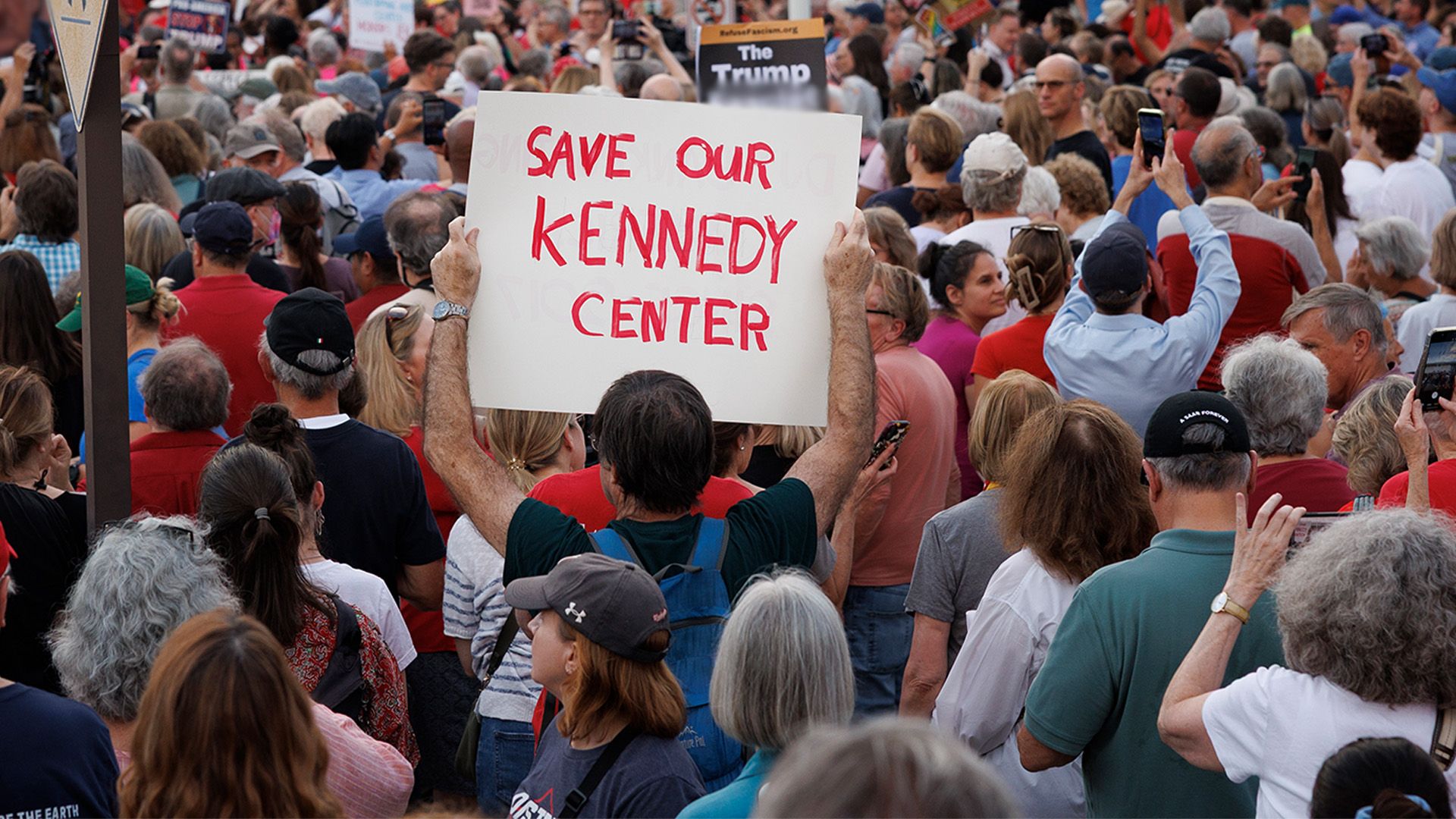
On September 18, a human chain consisting of hundreds of people surrounded the Kennedy Center in an attempt to protest the threat of demolition. The Hands Off the Arts organization behind the rally has organized several protests at the venue this year.
Federal Judge Rules DHS Unlawfully Cut FEMA Workforce
On September 11, 2026, U.S. District Judge Susan Illston from the District of Northern California ruled that DHS acted unlawfully by cutting the FEMA workforce in half and usurped the agency's authority by doing so.
While FEMA is part of DHS, a federal law adopted after Hurricane Katrina in 2005 says the department "may not substantially or significantly reduce (FEMA's) authorities, responsibilities, or functions.”
Democracy Forward, a left-leaning group that represents the union plaintiffs in the case, applauded the ruling.
In a separate decision, Judge Illston also faulted FEMA and DHS officials for using the Signal messaging app on their personal cell phones to communicate about staffing cuts and then deleting the messages.Illston said those messages would have been relevant to the lawsuit and that moving forward she would presume "that the lost Signal messages would have been unfavorable to Defendants because they would have been further evidence" of unlawful conduct.