Forensic Scientist Says Jeffrey Epstein Was Killed, Challenging Official Suicide Ruling
New analysis of Epstein’s autopsy photographs raises questions about injuries, missing evidence and the federal investigation into his 2019 death.
A forensic scientist who spent approximately a year examining Jeffrey Epstein’s autopsy records has concluded that the disgraced financier was likely killed rather than dying by suicide, directly challenging the official determination made following his death in federal custody in 2019.
The findings, presented Monday, November 16, in London, have received coverage from The New York Times, CBS News and CNN. They represent a significant challenge to the official account, although the scientist’s conclusions remain disputed and have not been independently established.
Michael Freeman, a forensic medicine researcher who specializes in investigating deaths and identifying errors in forensic examinations, obtained access to Epstein’s autopsy records through Epstein’s brother, Mark.
After examining photographs, documented injuries and the circumstances surrounding Epstein’s death, Freeman concluded that the physical evidence was more consistent with homicidal strangulation than suicidal hanging.
The Injuries Raising New Questions
According to reporting from The New York Times, Freeman identified several injuries that he believes cannot be adequately explained by the original suicide determination.
Among the most significant findings was the appearance of the ligature mark around Epstein’s neck.
In a typical hanging, the pressure from a ligature can produce a mark that slopes upward toward the suspension point. Freeman argues that Epstein’s neck injuries did not follow that expected pattern.
Instead, the photographs showed a deep, irregular mark with unusual branching.
Freeman also pointed to abrasions near Epstein’s neck, possible fingernail marks above the ligature line and a deep hemorrhage in his left shoulder muscle.
He argues that these injuries are more consistent with a physical confrontation followed by strangulation.
Working with forensic pathologist Anders Eriksson and cognitive neuroscientist Itiel Dror, Freeman used three-dimensional biomechanical reconstructions to evaluate whether the documented injuries could have resulted from the reported hanging.
Their conclusion was that the injuries were most consistent with strangulation from behind.
However, other forensic specialists have cautioned that unusual neck injuries do not independently establish homicide. Different mechanisms of hanging and strangulation can produce overlapping injuries.
What Happened Inside the Federal Jail?
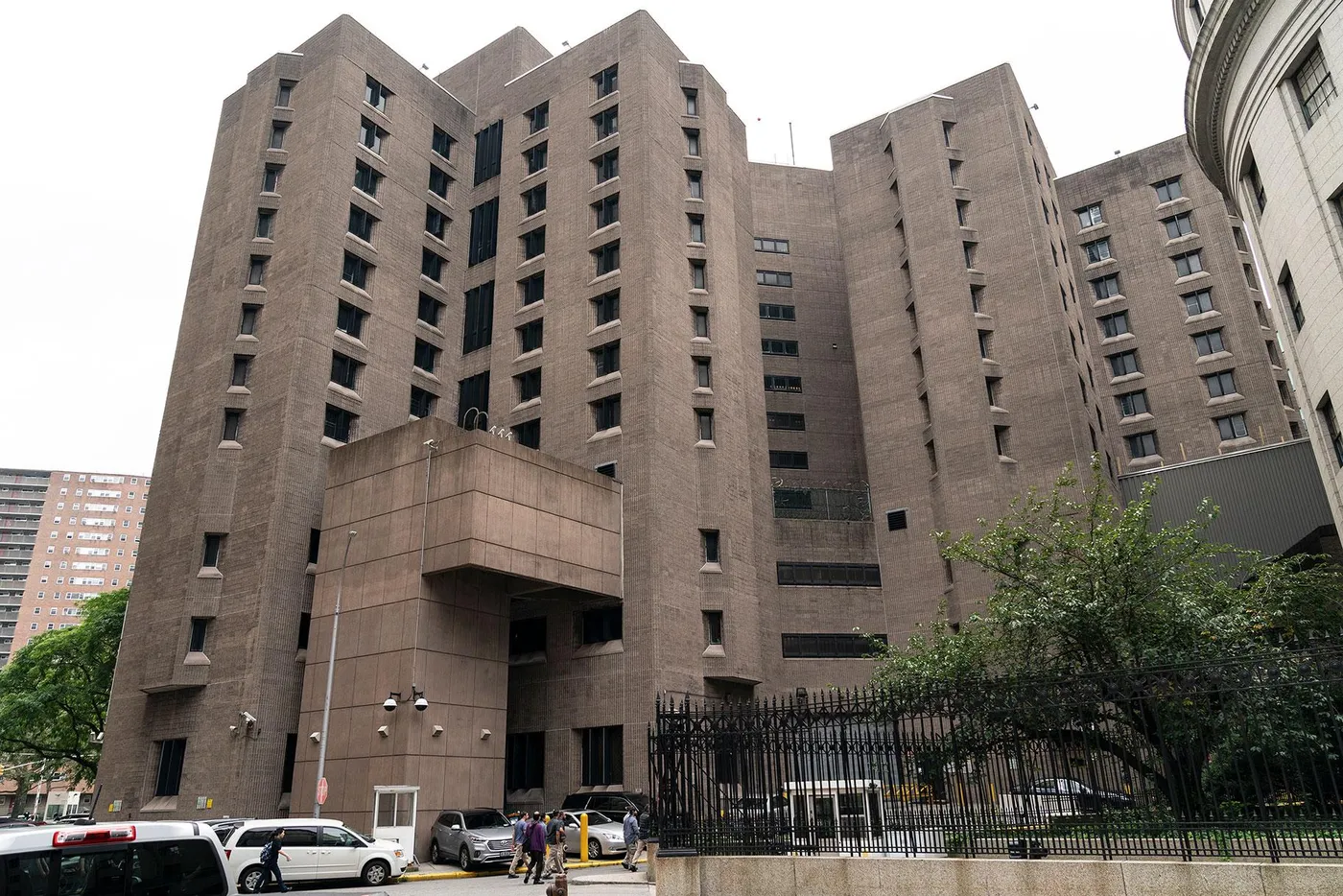
Epstein was found dead inside the Metropolitan Correctional Center in Manhattan on August 10, 2019, while awaiting trial on federal sex-trafficking charges involving underage girls.
His death was officially ruled a suicide by hanging.
But the circumstances surrounding his death have faced scrutiny for years, particularly because of documented failures inside the federal detention facility.
Investigators identified serious problems involving correctional officers, required inmate monitoring and the preservation of evidence.
The original medical examiner was also unable to inspect Epstein’s cell.
According to The New York Times, there were no photographs documenting Epstein's body in its original hanging position, and the material supplied to the medical examiner was not the actual ligature used.
Freeman also questioned why investigators did not test Epstein’s fingernails for DNA evidence.
These failures are significant because they limit what forensic investigators can reliably reconstruct years later.
They do not, however, establish that another person entered the cell or killed Epstein.
The Medical Examiner Still Disagrees
Despite the new analysis, the New York City Office of Chief Medical Examiner continues to stand by its original determination.
The office reaffirmed its conclusion following Freeman’s presentation, maintaining that Epstein died by suicide.
Previous investigations by the FBI and the Justice Department's Office of Inspector General also failed to establish evidence that Epstein was murdered.
The Justice Department's investigation documented extensive failures at the detention facility but did not conclude that those failures resulted from a homicide.
Freeman's findings have not yet been published in a peer-reviewed scientific journal. His efforts to secure publication have so far been unsuccessful.
That distinction matters.
His conclusions are a forensic interpretation of existing evidence, not a new official determination of Epstein’s cause or manner of death.
Why This Development Matters
For years, questions about Epstein's death have been dismissed in some conversations as little more than conspiracy theories.
But there is a difference between making unsupported allegations about a secret murder plot and examining documented problems with a federal death investigation.
The latter is legitimate journalism.
A qualified forensic researcher has now examined the complete autopsy file and publicly challenged the official findings. Other specialists disagree with his interpretation, but the underlying questions about missing evidence and investigative failures deserve scrutiny.
Epstein died while in federal custody, awaiting prosecution in a case involving the sexual exploitation and trafficking of underage girls.
His death ended the possibility of a criminal trial against him and left survivors without the opportunity to see him face a verdict.
The public has a legitimate interest in understanding exactly what happened inside that detention facility.
What Happens Next?
Freeman is seeking scientific publication of his findings, which would allow other researchers to evaluate his methods, calculations and conclusions.
Epstein's brother has also indicated that he intends to push for another official investigation.
For now, there has been no new official homicide ruling, no publicly established evidence identifying a killer and no confirmation that authorities intend to reopen the death investigation.
The evidence presented by Freeman raises questions. It does not settle them.
And that is precisely why this development deserves serious examination rather than speculation.
The Bottom Line
A forensic scientist with access to Jeffrey Epstein's autopsy records believes the evidence points to homicide. The medical examiner continues to stand by suicide, and previous federal investigations have not established foul play.
Both facts matter.
The American public deserves a thorough accounting of how one of the country's most notorious accused sex traffickers died in federal custody, including whether failures in the original investigation left critical questions unanswered.
Cup of Culture will continue following the evidence, examining new findings and reporting what can actually be verified.
Independent journalism matters.
Cup of Culture is an independent newsroom committed to reporting the stories that matter without corporate influence.
Subscribe to our free newsletter to receive reporting directly in your inbox.