Macklemore Chose Palestine Over Comfort. Ed Sheeran Chose the Tour.
When powerful people demanded silence on Palestine, Macklemore refused. Ed Sheeran’s tour ultimately moved forward without him.
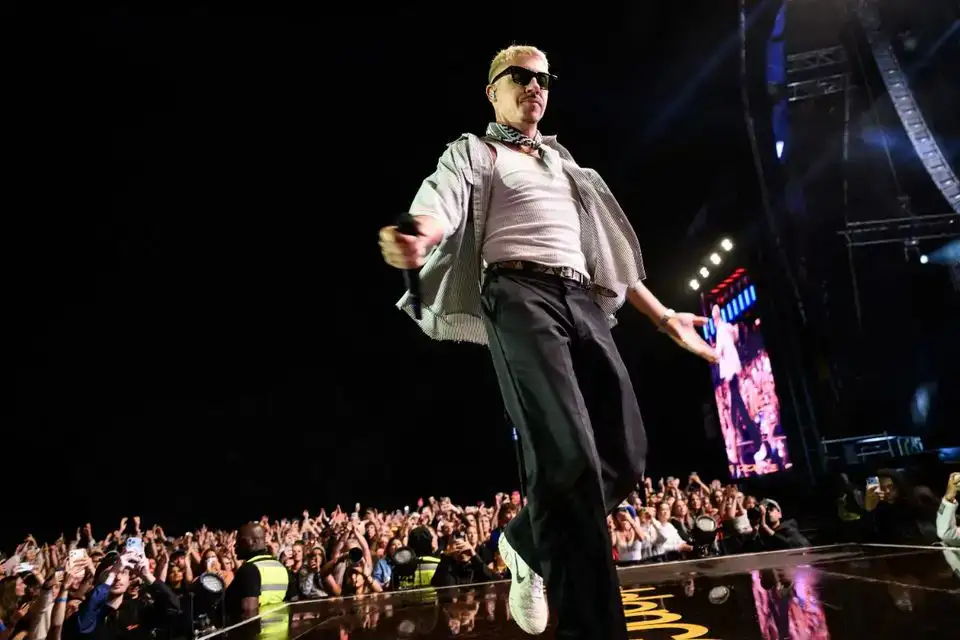
There are moments when being an artist means more than selling tickets, protecting a brand or keeping everyone comfortable.
Macklemore just had one of those moments.
After using his opening performances on Ed Sheeran’s Loop Tour to say “Free Palestine” and draw attention to Palestinians in Gaza and the occupied West Bank, Macklemore has been removed from the remaining U.S. dates of the tour.
And I think the response should be simple:
Good for Macklemore.
Because speaking up for Palestinian human rights should not cost someone their place on a concert tour.
Macklemore didn't hide what he believed. He stood inside one of the biggest stadiums in America and used the enormous platform he had been given to talk about people whose suffering is too often reduced to statistics, political arguments and sanitized headlines.
He told the crowd that Palestinians in Gaza and the occupied West Bank had not been forgotten. He also explicitly separated criticism of Israel from criticism of Jewish people, saying his message was about peace and equal dignity for human beings.
That distinction matters.
Criticism of the Israeli government is not inherently antisemitic. Supporting Palestinian freedom is not inherently antisemitic. Saying “Free Palestine” should not automatically disqualify an artist from standing on a stage.
But the backlash came anyway.
The Israeli American Council launched a petition calling for Macklemore to be removed. According to tour promoter Messina Touring Group, multiple venues subsequently said they would not allow concerts to proceed with Macklemore on the lineup. Macklemore has specifically alleged that New England Patriots owner Robert Kraft helped pressure other stadium owners after barring him from Gillette Stadium. Kraft has publicly defended the decision to bar Macklemore from his venue.
And eventually, Macklemore was gone.
This is where Ed Sheeran deserves criticism.
There is important context here. This wasn't simply Ed Sheeran waking up one morning and deciding he hated Macklemore's politics. Macklemore himself acknowledged that Sheeran was put in an extremely difficult position by pressure surrounding the tour. The two have reportedly been friends for more than a decade.
But pressure is precisely when principles become meaningful.
It's easy to support freedom of expression when nobody powerful objects.
It's easy to talk about love, peace and humanity when those words cost nothing.
The test comes when billionaire stadium owners threaten your tour. When advocacy organizations demand somebody be removed. When keeping an artist onstage suddenly becomes inconvenient.
That's when you decide what you actually stand for.
Whatever outside pressure existed, Macklemore says Ed Sheeran and his team ultimately made the decision to remove him. The tour continues. Macklemore does not.
Ed Sheeran has also yet to publicly explain that decision.
That silence matters.
Macklemore could have protected himself too.
He could have performed the hits, collected the check and gone home.
Instead, he decided that access to massive stadium audiences was worth risking if it meant using those stages to speak about Palestine.
And even after losing those dates, Macklemore refused to make himself the center of the story.
He said he wasn't the victim. Neither was Ed Sheeran. The victims, he argued, are Palestinians enduring death, displacement and destruction.
That is exactly why I support him.
Not because celebrities deserve medals for having political opinions.
But because when an artist has an enormous platform and chooses to use it for people with far less power, we should recognize what happens when powerful institutions try to make that advocacy disappear.
Macklemore was given a choice between comfort and conviction.
He chose conviction.
Ed Sheeran's tour was given a choice too.
It chose to continue without him.
And people are allowed to judge that choice.
Because “Free Palestine” shouldn't be a career-ending statement.
It shouldn't get someone thrown off a stage.
And nobody should have to remain silent about Palestinian suffering simply because powerful people would prefer not to hear about it.
Sean