Seattle Has a Public Safety Problem. Solving It Will Take All of Us.
Public safety is not a left-wing issue or a right-wing issue. It is a responsibility of government, and Seattle needs everyone at the table.
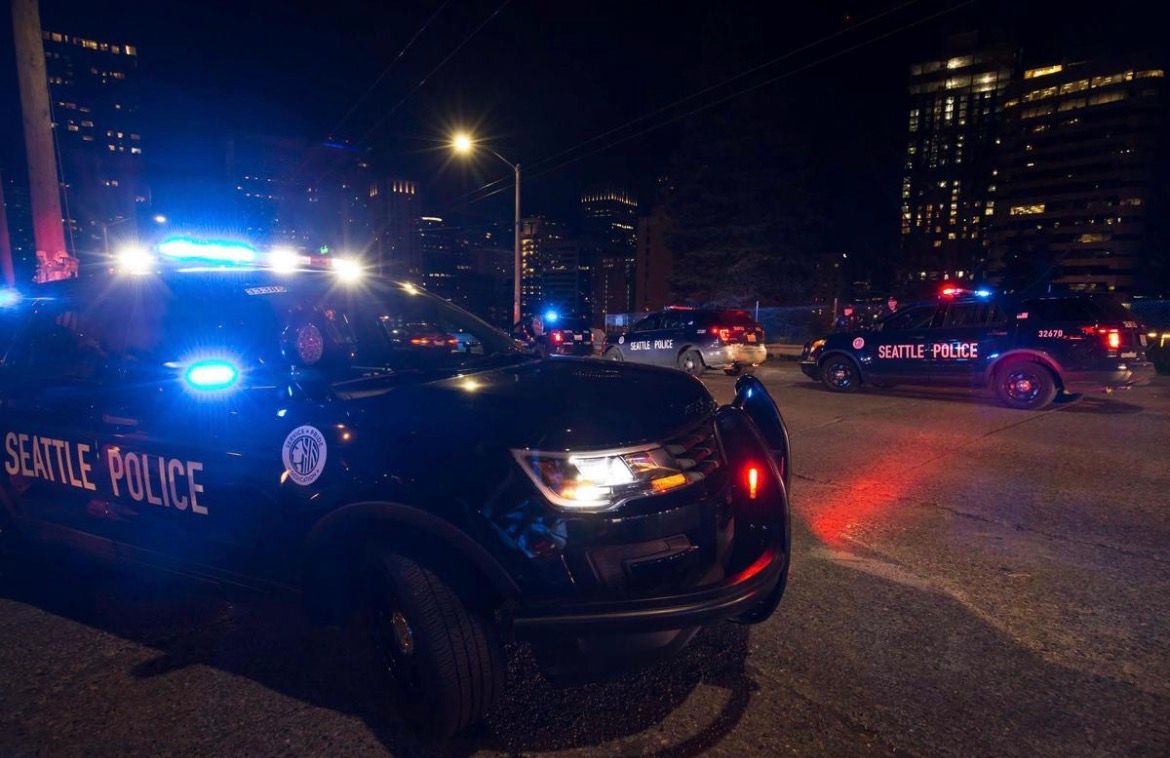
My friends, Seattle needs to have a serious conversation about public safety.
Not the version where Republicans point at every shooting and declare that progressive government has failed. Not the version where Democrats respond by throwing crime statistics back at people who are genuinely scared.
A real conversation.
Because people are being shot in our city, and when that happens repeatedly, telling people that Seattle is statistically safer than it was a few years ago isn’t enough.
The statistics do matter. Seattle Police reported that overall crime fell 18% in 2025 compared with 2024. Homicides fell 36%, from 58 to 37. Those numbers directly contradict the narrative that Seattle is experiencing some unprecedented collapse into lawlessness.
But there is another number we cannot ignore: about 80% of Seattle’s homicide victims in 2025 were killed with a gun.
Both realities can exist at the same time.
Seattle can be getting safer overall while still having a serious gun violence problem.
And acknowledging that does not make you conservative.
Even though I have been called one for even bringing this up. I’m not scared to talk about it.
Public safety doesn’t belong to the right
One of the biggest mistakes progressives can make is allowing conservatives to own the words “public safety.”
They don’t.
Wanting to walk home at night without getting shot isn’t conservative.
Wanting your kid to safely take public transportation isn’t conservative.
Wanting businesses, workers, unhoused people, tourists and everyone else to exist downtown without worrying about gunfire isn’t conservative.
That’s just wanting to live in a functioning city.
And progressive government should be extraordinarily serious about delivering that.
That doesn’t mean abandoning everything we know about police accountability, poverty, housing, addiction, mental health or systemic inequality. Quite the opposite.
It means recognizing that public safety is bigger than policing.
Police are part of the solution. They aren’t the entire solution.
This cannot just be the mayor’s problem
Mayor Katie Wilson has a massive responsibility here. So does the Seattle City Council. So does SPD. So does the CARE Department. So do prosecutors, behavioral-health providers, schools, community organizations, violence-prevention programs and ultimately the rest of us.
Seattle cannot keep operating public safety as a collection of separate institutions responding to separate pieces of the same crisis.
The mayor needs to lead.
The City Council needs to legislate, fund and provide oversight.
SPD needs the resources and staffing necessary to investigate violent crime, recover illegal firearms, solve shootings and intervene when someone poses an immediate threat.
The city needs civilian responders handling situations that don’t require armed police officers so those officers aren’t spending their time doing work somebody else could do better.
Community organizations need resources to reach people before violence occurs.
Young people need somewhere to go, something to do and somebody to turn to before a gun becomes the answer to whatever conflict they’re facing.
Behavioral-health services need to actually be available when somebody is in crisis.
And prosecutors need to take people who repeatedly commit serious violent crimes seriously.
None of these things contradict each other.
That’s the point.
Stop looking for one magical solution
There isn’t one. I wish there was.
Hiring another police officer isn’t going to solve the housing crisis.
Building affordable housing isn’t going to stop somebody actively shooting at another person tonight.
Sending an armed police officer isn’t necessarily the best response to somebody experiencing a mental-health crisis.
A social worker isn’t the appropriate person to confront somebody firing a gun.
Public safety requires us to be mature enough to understand those distinctions.
The question shouldn’t be, “Do you support police or community programs?”
The question should be:
What response works best for this particular problem?
Then we fund the hell out of whatever actually works.
Seattle needs a public safety table
I would love to see Seattle create something much more aggressive and transparent around gun violence and public safety.
Bring the mayor, City Council leadership, SPD, CARE, prosecutors, public-health officials, behavioral-health providers, community violence-intervention organizations, youth advocates and neighborhood representatives into the same room on a regular basis.
Look at where shootings are happening.
Look at when they’re happening.
Look at what connects them.
Look at where firearms are coming from.
Look at who is most at risk of becoming a victim or perpetrator.
Look at what interventions worked and which ones didn’t.
And then tell the public.
Not six months later.
Not buried inside a 90-page report nobody reads.
Tell us what you’re doing.
If one block in Belltown repeatedly experiences violence, Seattle should have a strategy for that block.
If young people are increasingly becoming involved in shootings, there should be an emergency strategy specifically addressing youth gun violence.
If the same small networks of people are responsible for disproportionate amounts of violence, interventions should focus intensely on those networks.
Government should be capable of being that precise.
Accountability also means telling us when something isn’t working
This is another place where progressive government has to improve.
Good intentions aren’t outcomes.
If Seattle spends millions of dollars on a public-safety program and shootings don’t decrease, we should examine it.
If a policing strategy isn’t working, change it.
If a community intervention program is producing incredible results, expand it.
If bureaucracy is preventing agencies from communicating with each other, tear through the bureaucracy.
And if City Hall screws something up, say so.
We recently saw Mayor Wilson acknowledge that Seattle failed to communicate quickly and clearly with the public following the deadly Bite of Seattle shooting. The city has since announced changes to its emergency communication protocols while the Office of Inspector General reviews what happened.
That’s what accountability should lead to: identify the failure, explain it and change the system.
But we need that mentality throughout public safety.
We also cannot govern by panic
This part matters just as much.
Seattle should not respond to several horrific shootings by throwing away civil liberties, abandoning police accountability or pretending every person experiencing homelessness or addiction is a violent criminal.
Fear produces terrible public policy.
We should follow evidence.
Seattle’s overall crime numbers have been moving in the right direction. That deserves acknowledgment because facts matter even when they complicate the political narrative.
But declining crime does not mean the work is finished.
If anything, it gives us an opportunity to become more targeted.
Instead of treating an entire city as dangerous, identify where violence is actually occurring and concentrate resources there.
Instead of treating thousands of people as potential criminals, focus interventions on the people and circumstances producing the greatest risk.
That’s smarter government.
And I would argue that’s progressive government.
I don’t want Seattle’s public safety debate to become another political football
I’m tired of every tragedy becoming evidence for somebody’s predetermined ideology.
Someone gets shot and one side screams, “See? Progressives destroyed Seattle.”
The other side responds, “Actually, crime is down.”
Meanwhile, somebody is dead.
That’s not good enough.
Mayor Katie Wilson should be held accountable for public safety. The Seattle City Council should be held accountable. SPD should be held accountable. Every agency receiving public money to make this city safer should be held accountable.
But accountability is different from blame.
Katie Wilson didn’t invent gun violence.
Progressive politics didn’t invent gun violence.
Seattle’s problems didn’t begin with the current mayor, and they aren’t going to disappear if voters elect somebody with a different letter next to their name.
This is bigger than one politician.
The goal should be incredibly simple
Fewer people get shot.
Fewer families receive the worst phone call imaginable.
Fewer kids grow up believing carrying a gun is necessary to survive.
People feel comfortable walking through Belltown at midnight.
Someone experiencing a behavioral-health crisis gets help instead of jail when jail isn’t necessary.
When violent crime does occur, investigators have the resources to solve it.
And Seattle residents trust that when something goes horribly wrong, their government will tell them what happened and what it’s doing about it.
That’s public safety.
Not “tough on crime.”
Not “soft on crime.”
Effective on crime.
Seattle has an opportunity right now to build a model of public safety that doesn’t fit neatly into America’s exhausted left-versus-right argument.
It can be compassionate and firm.
It can invest in police and alternatives to police.
It can address immediate violence while attacking the conditions that produce violence in the first place.
It can protect civil liberties while aggressively confronting people who are actually committing violent crimes.
But none of that happens automatically.
It requires Mayor Wilson to be hands-on. It requires the City Council to be hands-on. It requires SPD leadership to be hands-on. It requires community organizations to be at the table. And it requires residents to demand measurable results instead of ideological talking points.
Because ultimately I don’t care whether the solution gets labeled progressive, moderate, conservative or anything else.
I care whether fewer people get shot.
And that should be something every single person in Seattle can agree on.
- Sean