Seattle Opens 90 Tiny Homes as Mayor Katie Wilson Accelerates Homelessness Response
The new Cloverleaf Village in South Park offers private shelter, on-site services, and a path toward permanent housing as Seattle moves forward with an ambitious shelter expansion.
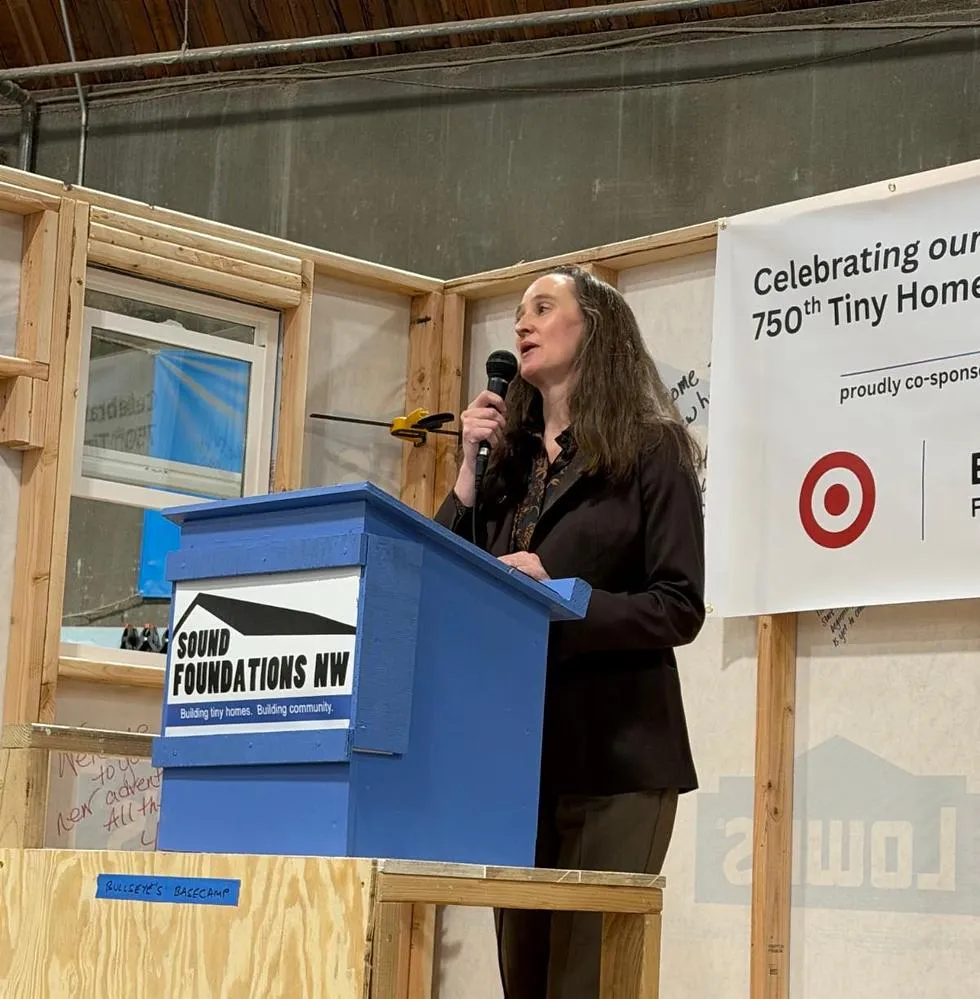
Seattle has taken another significant step toward addressing its homelessness crisis, opening 90 new tiny house shelter units in the South Park neighborhood as Mayor Katie Wilson pushes to expand emergency housing across the city.
The new Cloverleaf Tiny House Village officially opened Tuesday, October 27, marking a milestone in Wilson's effort to accelerate shelter development and move people experiencing homelessness into safer, more stable living conditions.
Operated by the Low Income Housing Institute (LIHI), Cloverleaf is the organization's largest tiny house village to date.
For people living outdoors, the development represents something that is often taken for granted: a private place to sleep, a door that locks, protection from the weather, and access to people who can help them rebuild their lives.
But the project also represents something larger.
After years of Seattle struggling to respond to homelessness, Wilson's administration is attempting to demonstrate that expanding shelter capacity can happen quickly when government agencies, nonprofit organizations, and private partners work together.
🔴 More Than Just a Roof
Each of Cloverleaf's 90 tiny homes measures approximately 96 square feet and includes insulation, electricity, heating, air conditioning, windows, and furnishings.
Residents also have access to shared bathrooms, laundry facilities, a community kitchen, gathering spaces, and a dog run.
Staff will be present around the clock.
Importantly, the village provides access to case management and behavioral health services intended to help residents navigate the challenges that often accompany homelessness.
Those services matter.
Homelessness is rarely resolved simply by providing someone with a temporary place to sleep. Finding permanent housing can involve navigating complicated application processes, obtaining identification, accessing medical care, addressing financial instability, and connecting with employment opportunities.
For someone experiencing chronic homelessness, having a consistent place to stay while working through those barriers can make a meaningful difference.
The village is designed to provide that stability.
At Tuesday's opening, Wilson emphasized the human impact of the development.
"Cloverleaf Village isn’t just ninety tiny houses. It’s ninety chances for someone to come inside and catch their breath," the mayor said.
The message reflects a central argument behind the administration's approach: Seattle cannot meaningfully reduce unsheltered homelessness without creating places where people can safely go.
🔴 Nearly $2.8 Million in Private-Public Investment
Cloverleaf was made possible through nearly $2.8 million in grants from the Shelter Accelerator Fund.
The fund is a partnership involving the City of Seattle and Challenge Seattle, with support from the Seattle Foundation.
Challenge Seattle is led by former Washington Governor Christine Gregoire and brings together major regional employers and business leaders.
The partnership illustrates how private investment can help accelerate shelter construction while public funding supports ongoing operations.
For Seattle, where housing costs and homelessness remain major challenges, that cooperation could become an important component of future projects.
However, private funding alone will not solve the city's housing shortage.
Shelter developments require ongoing financial commitments for staffing, maintenance, security, food, and supportive services.
The long-term success of Cloverleaf will depend not only on the initial investment but also on whether residents receive the resources necessary to transition into permanent housing.
🔴 Wilson's Bigger Plan: Nearly 1,000 New Shelter Units
The opening comes as Wilson pursues a broader expansion of Seattle's emergency shelter system.
According to the mayor's office, her proposed budget includes $183 million in ongoing investments addressing homelessness.
That includes $37 million intended to add nearly 1,000 shelter beds by the end of 2027, with the expanded capacity projected to serve approximately 1,750 people annually.
The administration's shelter acceleration strategy targets 960 additional units by the end of 2027.
The plan also includes specialized services for people with complex needs and approximately $11.2 million in proposed 2027 funding to help households at risk of homelessness remain housed.
That last component is particularly important.
Preventing someone from losing their home in the first place can reduce the need for emergency shelter later.
The administration is also moving toward a neighborhood-centered strategy intended to improve coordination between shelter providers, outreach teams, and other service organizations.
Rather than relying exclusively on moving people from one location to another, the approach seeks to connect individuals with available shelter and longer-term support.
Whether the city can deliver the full expansion on schedule remains an important question.
🔴 Showing the Human Side of Seattle's Housing Crisis
For years, public conversations about homelessness in Seattle have frequently centered on encampments, public safety, and the visibility of people living outdoors.
Those concerns have often dominated political debates.
But homelessness is also a humanitarian crisis.
Behind the statistics are people who have lost jobs, experienced medical emergencies, struggled with rising rents, escaped unsafe living situations, or encountered circumstances that made maintaining stable housing impossible.
A tiny home cannot reverse every one of those challenges.
It can, however, provide a starting point.
A person with a secure place to sleep and somewhere to keep their belongings may be better positioned to attend appointments, seek employment, access treatment, and work toward permanent housing.
That is the premise behind developments such as Cloverleaf.
And it is why evaluating the village requires looking beyond the number of units constructed.
The more important questions are how many people move inside, how many remain safely sheltered, and how many ultimately transition into permanent homes.
🔴 Progress, but Significant Challenges Remain
Cloverleaf's opening is a measurable expansion of Seattle's shelter capacity.
It is not, however, a solution to the city's entire homelessness crisis.
According to reporting from The Urbanist, King County's 2026 Point-in-Time Count recorded a 9% increase in homelessness compared with 2024.
That means Seattle is expanding shelter capacity while the broader regional need continues to grow.
There are also practical concerns surrounding the new village.
Cloverleaf is located in an industrial section of South Park, more than half a mile from the nearest bus stop. Some surrounding streets lack sidewalks and experience substantial truck traffic.
Those conditions could make accessing employment, appointments, grocery stores, and other services difficult for residents without transportation.
LIHI has indicated that it is developing a shuttle transportation plan, but the details had not been finalized as of the village's opening.
Accessibility and transportation will be important measures of the project's success.
The village also provides temporary shelter rather than permanent housing.
Without sufficient affordable housing available for residents to move into, people could remain in emergency shelter longer than intended.
That is a challenge extending well beyond Cloverleaf.
Seattle must continue increasing permanent affordable housing opportunities alongside emergency shelter expansion.
🔴 A Different Approach to Homelessness from the past
The opening of Cloverleaf Village offers a tangible example of what Seattle's homelessness response can look like when the focus shifts toward creating shelter capacity and connecting people with services.
It also gives residents a concrete project against which to evaluate the mayor's promises.
Wilson has made accelerating shelter development a central priority of her administration.
Now, the question is whether that momentum can continue.
The city must demonstrate that it can open additional facilities, maintain adequate funding, address neighborhood concerns, and help residents transition from temporary shelter into permanent housing.
Those outcomes will ultimately determine whether the strategy succeeds.
For now, Cloverleaf represents 90 new opportunities for people experiencing homelessness to move indoors.
That is meaningful progress.
But the larger goal remains unchanged: a Seattle where fewer people are forced to survive outside, and where access to safe, stable housing is treated as a fundamental community priority.
🔴 The Future Of Seattle Housing
Seattle's homelessness crisis will not disappear with the opening of a single tiny house village.
But 90 new shelter units mean 90 additional opportunities for people to find safety, privacy, and stability.
The opening also demonstrates that expanding shelter capacity is possible when city leadership, service providers, and private partners coordinate their efforts.
The next test for Wilson's administration is turning those opportunities into lasting housing outcomes.
Because the real measure of success isn't simply how many tiny homes Seattle builds.
It's how many people no longer have to call the streets home.
Sources and Further Reading
Seattle Mayor's Office, October 27, 2026: Mayor Wilson's Shelter Acceleration Opens 90 New Tiny House Shelter Units to Reduce Homelessness.
The Urbanist, October 29, 2026: Seattle Opens Its Largest Tiny House Village Yet in South Park.
West Seattle Blog, October 27, 2026: New Tiny-House Village Opens in South Park, With Glassyard Commons in West Seattle Soon to Follow.
Support Independent Local Journalism
Cup of Culture is an independent Seattle-based newsroom covering the decisions, policies, and people shaping our communities.
From City Hall to national politics, we're committed to reporting that provides accountability, context, and a clearer understanding of what's happening around us.
Subscribe to our free newsletter for independent reporting delivered directly to your inbox.