Supreme Court Order Restores Expanded Voter Citizenship Verification Program
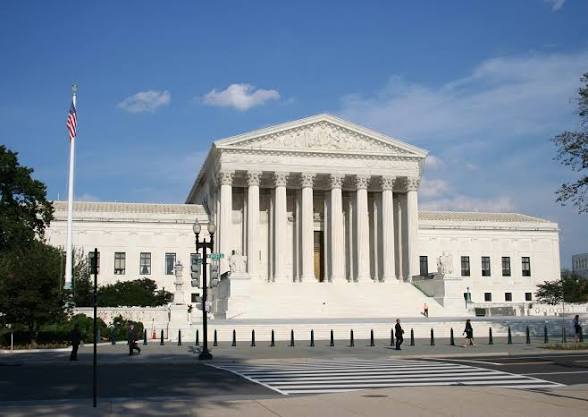
The Supreme Court allowed the Trump administration to resume its expanded voter citizenship verification program in implementing an emergency stay order, which allows states to use Social Security records to confirm voters citizenship. Justices Sotomayor, Kagan, and Jackson dissented in the 6-3 ruling.
The majority decision cited that the Illegal Immigration Reform and Immigrant Responsibility Act of 1996, likely authorizes the Department of Homeland Security (DHS) to obtain citizenship information via Section 1373(a). Section 1373(a) dictates that no government entities/officials, federal, state, or local laws can restrict or prohibit the exchange of information with DHS regarding citizenship or immigration status. The majority also ruled that it did not violate federal privacy protections.
Justice Jackson argues that the 1996 law does not override federal privacy protections. She warned that outdated Social Security records could cause eligible voters, particularly recently naturalized citizens, to lose their registrations or face additional requirements.
In March 2025, President Trump signed Executive Order 14248 directing DHS to put new systems in place to allow state and local authorities to verify the citizenship status of registered voters and individuals registering to vote. The Executive Order also directed the Social Security Administration (SSA) to make its records available to DHS for that purpose.
The DHS, in turn, released a renewed version of the SAVE (Systematic Alien Verification for Entitlements) program that allowed states to verify the citizenship of individuals on voter rolls ahead of the upcoming midterm elections.
The lawsuit was filed by The League of Women Voters, who argued that the federal government knowingly violated the privacy rights of American citizens in direct violation of the Privacy Act of 1974 and the Social Security Act. They contended that Congress never authorized executive agencies to reference records from the Social Security Administration (SSA) to create what effectively amounts to a "master database of U.S. citizens".
Furthermore, they asserted that DHS completely bypassed required legal procedures. They argued that radically transforming the functionality of the SAVE system, which was legally created by Congress in 1986 strictly to verify immigration status for people applying for public benefits, into a bulk-search tool for voting rolls was an unlawful overreach of agency authority that lacked an explicit congressional mandate.
They also put forward evidence demonstrating that the SAVE system is flawed and structurally incompatible to correctly identify eligible versus ineligible voters. Because federal databases are slow to reflect changes like naturalization, they argued that the database would errantly show newly eligible voters as ineligible. They claimed that states utilizing this modified system were actively and wrongfully erasing eligible citizens from voter registries before the impending midterm election.
The Trump administration and defending states argued that the 1996 provision gives federal and state agencies sweeping, unrestrictable authority to share and cross-reference citizenship data between agencies. They contended that Section 1373(a) created the legal framework for DHS to create the modified SAVE system to pull the records they deem necessary. Further, they asserted that the federal government has profound, legitimate interest in assisting states with the maintenance of accurate voter registries to prevent noncitizens from participating in federal elections.
In an unsigned per curiam order, meaning it was a collective ruling of the court majority rather than being authored or signed by an individual justice, concluded that the administration was likely to succeed on the merits if brought to a hearing. They accepted that DHS was backed by the 1996 federal statute to pull records from SSA and other such agencies to create a database of eligible voters. They emphasized that it is the government's right on how to curate the information and disseminate it.
They explicitly stated that the "Federal Government has an obligation to respond to requests from state and local election officials seeking to verify the citizenship of voters".
The Court's opinion criticized a lower court's block, noting that the injunction directly "prevents the Federal Government from using the program it believes is best suited to the task". It found that inhibiting the federal government's chosen method to assist state and local agencies during an election cycle constituted an unnecessary hurdle that would be cleared with a stay.
The states that choose to participate can immediately begin using the expanded SAVE database to cross-reference their entire voter registration rolls with Social Security Administration (SSA) records. This will likely lead to problems for newly-eligible immigrant voters as the immigration and naturalization databases are slow to update and will ultimately lead to them being flagged as a noncitizen.
This ruling was released on the emergency, or “shadow", docket and will still need to work through the US Court of Appeals for the 5th Circuit before being heard in front of the Supreme Court officially on the merits.
Any and all eligible citizens should be prepared to present a second form of identification, such as a US passport, to prove citizenship eligibility.
For complete details on voter registration rules, state-specific requirements, and how to verify your status on the vote rolls, please refer to official voter resources available on USA.gov Voting and Elections or contact your local elections office through the National Association of State Election Directors.