The Ari Hoffman Problem: When Political Activism, Misinformation and Journalism Collide
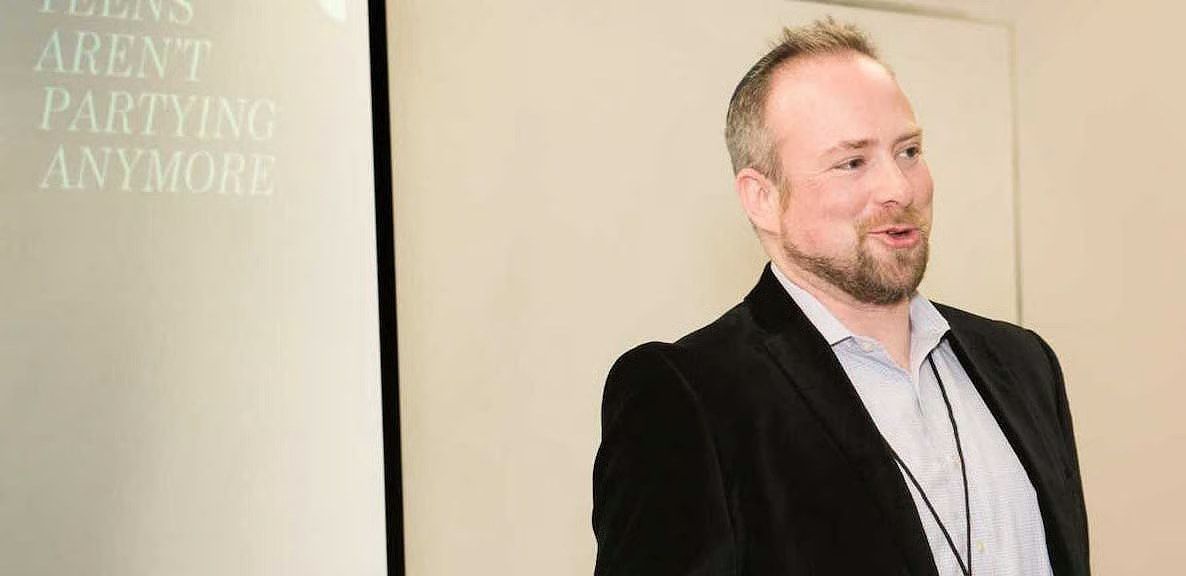
Ari Hoffman wants to be treated as a journalist.
That makes his record relevant.
Not his conservative politics. Not whether Seattle progressives like him. Not whether his radio show pisses people off.
His record.
Because over several years, the Seattle conservative radio host has built a public profile that repeatedly crosses the boundaries between journalism, political activism and inflammatory commentary. He has amplified false information, participated directly in political advocacy, used dehumanizing rhetoric about vulnerable populations, and attached the language of terrorism to political protesters.
And now he is fighting for the privileges afforded to journalists covering Washington's government.
The question isn't whether Ari Hoffman has a First Amendment right to say these things. He does.
The question is what happens when someone engaging in political advocacy and repeatedly using incendiary rhetoric also asks the public and government institutions to treat him as an independent journalist.
A false story about a homeless encampment
The pattern goes back years.
In March 2019, while running for Seattle City Council, Hoffman shared a post from the controversial group Safe Seattle claiming a person had been beheaded at a homeless encampment in North Beacon Hill.
There was a body.
But the sensational story Hoffman amplified wasn't established.
Hoffman eventually deleted the post and acknowledged that he “should have verified the facts before sharing.”
That admission matters.
So does what happened afterward.
Despite spreading an unverified story associating an extraordinarily gruesome murder with homelessness, Hoffman continued defending Safe Seattle as a generally reliable source.
This wasn't occurring in a vacuum.
During the same City Council campaign, Hoffman repeatedly used the term “vagrants” when discussing people experiencing homelessness. Critics at the time explicitly warned that this language contributed to dangerous rhetoric about an already vulnerable population.
Hoffman's approach wasn't simply criticism of Seattle's homelessness policies.
It repeatedly transformed homelessness into something frightening.
And sometimes the frightening story wasn't true.
Then came election misinformation
Three years later, another example emerged.
During Washington's 2022 primary election, a video circulated online showing election workers collecting ballots near a ballot drop box.
The video was presented on social media as suspicious.
Hoffman amplified it.
There was a problem.
Nothing improper was happening.
Washington election officials explained that collecting ballots from crowded drop boxes before voting deadlines is standard procedure. It helps prevent overflowing boxes and allows election administrators to manage voters arriving near the deadline.
PolitiFact investigated the claim and rated it False.
Its source list specifically included Hoffman's Twitter post.
Election misinformation is not harmless political entertainment.
Americans have spent years watching false claims about election administration erode confidence in democratic institutions and turn ordinary election workers into targets of suspicion.
Journalists are supposed to interrogate claims before broadcasting them.
Hoffman helped broadcast the suspicion first.
Calling protest organizers “terrorists”
Then there is the rhetoric.
In April 2024, Seattle-area students walked out of school as part of demonstrations demanding an end to the war in Gaza.
KUOW reported on the demonstrations.
It also reported Hoffman's response.
Hoffman called organizers “terrorists” on social media.
That is an extraordinary label.
“Terrorist” does not mean someone whose politics you despise. It does not mean protester. It does not mean activist.
Terrorism has an actual meaning.
Yet Hoffman attached that word to organizers of a political protest involving Seattle students.
That kind of rhetoric matters precisely because Hoffman isn't an anonymous account with twelve followers.
He has a microphone.
He has an audience.
And words delivered through a major media platform can turn political disagreement into something far darker: the idea that your ideological opponents aren't merely wrong, but dangerous enemies.
The RV stunt
Another episode reveals something different about Hoffman's political style.
In 2019, Hoffman publicly discussed moving RVs in front of Seattle City Council members' homes as part of his campaign against the city's handling of homelessness.
This isn't speculation reconstructed years later.
Hoffman described the idea himself during proceedings before the Seattle Ethics and Elections Commission.
According to official commission minutes, Hoffman said he had sent a letter to the City Council and mayor saying that if officials wouldn't deal with RVs, he would.
He said he had a friend with a tow truck and initially planned to move RVs.
After considering the legal consequences, Hoffman said they instead decided they would buy RVs and place them outside council members' homes.
Then reality produced a bizarre coincidence.
An unrelated family's RV happened to be parked outside Councilmember Lisa Herbold's home.
Because Hoffman had publicly discussed essentially that scenario, people assumed the vehicle was part of the stunt.
KIRO 7 reported that the RV was subsequently vandalized.
The family said its presence outside Herbold's home had been a coincidence.
Hoffman didn't vandalize the RV, and there is no evidence he instructed anyone to do so.
That distinction is important.
But the episode demonstrates something else: inflammatory political theater doesn't always stay neatly contained inside the theater.
Real people can end up standing on the stage.
Journalist or political participant?
That question has become considerably more important in 2026.
Hoffman sought press credentials granting special access to Washington's House of Representatives.
The House denied him.
Why?
Not because he was conservative.
According to federal court records, officials cited Hoffman's involvement in political advocacy.
One example was particularly concrete.
Hoffman appeared as a featured speaker at a November 2025 “Super Signer Rally” organized by Let's Go Washington.
Let's Go Washington isn't a news organization.
It's a political action committee advocating for ballot initiatives.
Court records say the rally supported initiatives pending before the Legislature.
Columbia Journalism Review went further in its examination of Hoffman and two other conservative media figures seeking credentials.
CJR reported that all three had accepted payment from political organizations.
It reported that Hoffman had been a paid speaker at Republican Party events and had campaigned for legislative initiatives, including the initiative seeking to prohibit transgender girls from participating in girls' school sports.
Those facts create an obvious journalistic problem.
A reporter can have political opinions.
Reporters can write commentary.
Independent journalists certainly don't need to pretend they have no worldview.
But actively campaigning for legislation and receiving money for appearances at partisan political events is fundamentally different from expressing an editorial opinion.
You're no longer simply observing politics.
You're participating in it.
Hoffman took the fight to court
Hoffman, Brandi Kruse and Jonathan Choe sued after being denied Washington House press credentials.
They argued that the credentialing system violated their constitutional rights.
A federal judge was unconvinced, at least at the preliminary stage.
U.S. District Judge David Estudillo denied their request for an emergency temporary restraining order that would have forced the House to provide access.
The ruling did not declare that Hoffman isn't a journalist forever, nor did it resolve every underlying constitutional issue in the lawsuit.
But the judge found the plaintiffs had failed to demonstrate the likelihood of success necessary for the extraordinary relief they requested.
The House defended its rules on a straightforward principle: journalists receiving privileged access should be independent observers rather than participants with a stake in legislative proceedings.
That's not an outrageous standard.
It's Journalism 101.
This is bigger than Ari Hoffman
And this is where the story becomes important.
Conservative journalism isn't the problem.
Right-wing journalism isn't the problem.
Aggressive journalism isn't the problem.
Independent journalism certainly isn't the problem.
I run an independent newsroom. I have political opinions. Cup of Culture has an unmistakable progressive perspective.
The difference between advocacy journalism and political machinery still matters.
If I started accepting money to appear at Democratic Party fundraisers, actively campaigned for legislation and then demanded special government access on the basis that I was simply an independent observer, readers should question that too.
That standard cannot change depending on whose politics we like.
But Hoffman's record raises an additional concern.
Political advocacy exists alongside a history that includes amplifying an unverified sensational story about homelessness, amplifying a false election-fraud narrative and calling political protest organizers “terrorists.”
Individually, each incident can be explained away.
Taken together, they establish a pattern worth examining.
Why I believe that pattern is dangerous
Danger doesn't always arrive wearing a uniform.
Sometimes it arrives through repetition.
A homeless encampment becomes the setting for a gruesome story before the facts are verified.
Routine election administration becomes suspicious activity.
Political protesters become “terrorists.”
Political advocacy becomes journalism when access is desired.
Each transformation pushes the audience slightly further away from reality and slightly closer to seeing neighbors, protesters, vulnerable people and democratic institutions as threats.
That is why this matters.
The danger isn't that Ari Hoffman is conservative.
The danger is what happens when journalism's credibility is borrowed to legitimize political activism and inflammatory rhetoric while the standards traditionally attached to journalism become optional.
Hoffman has every right to advocate for conservative causes.
He has every right to campaign for ballot initiatives.
He has every right to speak at Republican events.
He has every right to host a conservative radio program and say things I find reprehensible.
But journalism carries something advocacy doesn't automatically receive:
public trust.
And if someone wants that trust, their record deserves scrutiny.
Ari Hoffman's does.
And Seattle should be paying attention.
We sure as hell will be, and we won't back down from making sure people know who is doing this dangerous work in the area.
Stay tuned for more!