The Point Was Never the Point
Why dismissing No Kings misses everything that matters
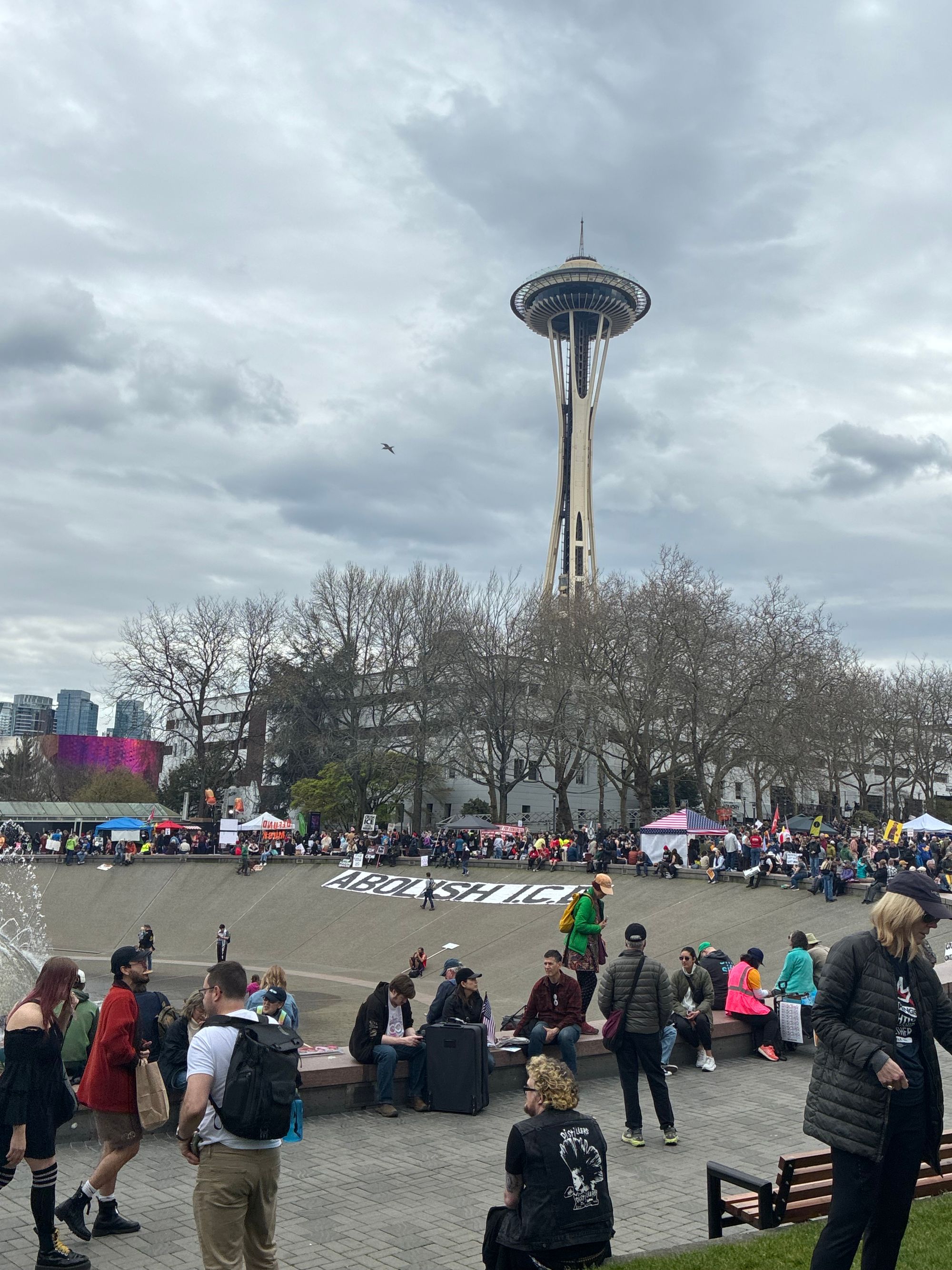
Today, somewhere between 9 and 10 million people took to the streets across the United States. Not in a handful of blue-city strongholds — in all 50 states. In Driggs, Idaho. In Topeka, Kansas. In Fort Myers, Florida. In towns most political commentators couldn’t find on a map.
And yet, before the marches had even wound down, a familiar voice piped up from corners of the left: what’s the point?
I want to talk to that voice directly, because I think it fundamentally misunderstands what protest does — and what today actually was.
The “pointless” critique sounds smart. It isn’t.
The argument usually goes something like this: Trump doesn’t care, Congress won’t act, nothing changes, so why bother? It frames protest as a direct lobbying mechanism — something that only “works” if it produces immediate legislative outcomes. By that metric, yeah, marching through your city on a Saturday doesn’t do much.
But that’s not what protest is for.
Protest is infrastructure. It’s the unglamorous, slow work of building the kind of organized social power that eventually does move legislation, unseat incumbents, and shift the cultural ground beneath our feet. The march is a meeting. The rally is a recruitment drive. The sign you carry tells the person next to you — a stranger — that they are not alone in what they’re feeling.
That’s not nothing. That’s everything.
What actually happened today.
Organizers estimated that the first two rounds of No Kings rallies drew more than 5 million people in June and 7 million in October. Today they were expecting 9 million — and more than 3,100 events were registered across all 50 states, 500 more than in October.
Crucially, two-thirds of RSVPs for the rallies came from outside of major urban centers, including communities in deep-red states like Idaho, Wyoming, Montana, Utah, South Dakota, and Louisiana. Almost half of protests took place in GOP strongholds.
Think about what that means. People in places where it is socially and sometimes physically risky to be openly anti-Trump are showing up, finding each other, and refusing to be invisible. That is how you build a movement. Not through perfect policy wonkery — through people realizing they have neighbors who feel the same way they do.
Community is the infrastructure.
Every major political shift in American history was built on this exact foundation. The labor movement. The civil rights movement. Marriage equality. These weren’t won because people stayed home, scrolled, and wrote think pieces about the futility of public action. They were won because people showed up — over and over and over — until the showing up became an identity, a community, a force.
Ezra Levin, co-founder of Indivisible, described the rallies as a place for everybody to exercise their rights as Americans in a patriotic and safe way. That’s not a small thing right now. In a moment when the White House is dismissing millions of protesters as “Trump Derangement Therapy Sessions,” the act of showing up in public, with your neighbors, and saying no — out loud, in daylight — is an act of radical normalcy.
It says: we are still here. We are organized. We are not afraid.
The real risk isn’t protest. It’s isolation.
The “it’s pointless” framing has a cost that doesn’t get talked about enough. When people on the left publicly mock or dismiss protest, they don’t just opt out — they actively discourage others from engaging. They give the disengaged an intellectual permission slip to stay home. They fracture the coalition before it can form.
The person who showed up in Topeka today, or in Salt Lake City, or in a small town in eastern Idaho — they needed to see that they weren’t alone. Maybe they’re not ready to canvass. Maybe they don’t know how to donate. But they came out, they found their people, and now there’s a thread connecting them to something bigger.
That thread is how movements are made.
The point was never the point.
Today wasn’t a policy ask. It wasn’t a negotiation. It was millions of people saying, to each other and to anyone watching: this is not normal, and we refuse to accept it.
If you spent today online explaining why that was a waste of time, I’d ask you to sit with a harder question: what are you building? Who are you connecting with? What is your theory of change that doesn’t involve ordinary people finding the courage to stand together in public?
Because I’ll take 9 million people in the streets over a very smart take any day of the week.
Stay loud.
— Sean
(Sources: Time, PBS NewsHour, CNN, NPR)
If this resonated, share it with someone who needs to hear it — and subscribe to Cup of Culture for more no-filter progressive analysis. We’re building something here, one reader at a time. 🫶