Trump’s “Election Integrity Army” Is Not What It Sounds Like
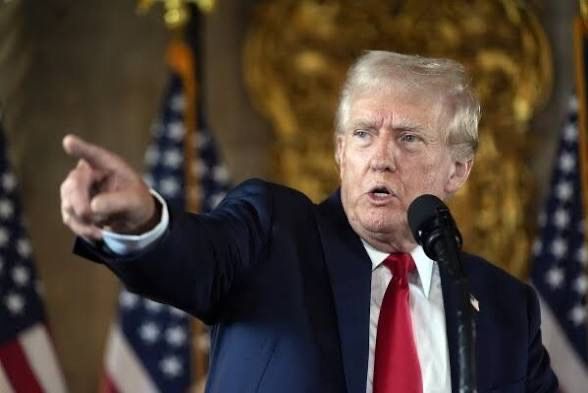
This morning, Donald Trump announced on Truth Social that he’s deploying a Republican “Election Integrity Army” into every single state for the 2026 midterms. And he says it’s going to be “much bigger and stronger” than what he ran in 2024.
Let that sink in.
We are six months out from an election that will decide control of Congress — and the sitting president just announced he’s mobilizing a nationwide political army to be present at polls across America.
This is not a drill.
What He Actually Said
Trump’s post framed this as a response to a Democratic election protection task force launched last month by Senate Minority Leader Chuck Schumer. That task force includes former Attorney General Eric Holder and election attorney Marc Elias — two people who have spent years fighting Republican voter suppression in court.
Trump called it a plot to “suppress Republican voters and interfere in our elections.” He attacked Schumer with an ethnic slur. He called Holder and Elias disgusting. And then he promised his own army — bigger, stronger, everywhere.
Here’s the thing: Schumer’s task force exists because of what Trump’s party has already been doing. Redistricting pushes in Tennessee, Alabama, and Virginia. An executive order restricting mail-in voting. The SAVE America Act, which would require millions of Americans to produce a passport or birth certificate just to register to vote.
Democrats aren’t playing offense here. They’re playing defense. And barely keeping up.
What His “Army” Actually Is
In 2024, the RNC ran a program called “Protect the Vote” — thousands of volunteers stationed as poll watchers, plus a legal team ready to file litigation on Election Day. It sounds bureaucratic. It wasn’t. Poll watchers can challenge voters. They can slow lines. They can create an atmosphere of intimidation in communities that are already skeptical about whether their vote counts.
Now Trump wants that — but bigger. He gave no specifics on scale or scope. He doesn’t have to. The announcement itself is the message: We will be watching you.
Why This Moment Is Different
Trump has also said — on the record, to NBC News — that he’ll only accept the 2026 midterm results if he feels they’re “honest.” He said it in February. Nobody made nearly enough noise about it.
Read that again. The president of the United States pre-emptively reserved the right to reject an election outcome. And now he’s building an army to be present at that election.
This isn’t election integrity. This is election infrastructure — built by one party, for one party, ahead of a vote that could end their congressional majority.
The Virginia Supreme Court just struck down a Democratic-leaning congressional map. Republicans are pushing new maps in multiple states. The “Election Integrity Army” is one piece of a much larger puzzle — and the picture it’s making should scare every person who believes that elections should be decided by voters, not by whoever controls the machinery around them.
What You Can Do Right Now
The midterms are in November. That’s not far. Here’s where to start:
• Check your voter registration. Do it today. Laws are changing and rolls are being purged.
• Know your polling place. It may have changed.
• Get involved with election protection efforts in your area. Lawyers’ Committee for Civil Rights, Common Cause, and state-level voting rights orgs need volunteers.
• Talk about this. Loudly. The normalization of this language — “army,” “integrity,” pre-rejecting results — only works if we treat it like politics as usual.
It isn’t.
Democracy doesn’t die in one moment. It dies in a hundred moments we decided weren’t urgent enough to say something about.
This is one of those moments.
I’m Sean Bartley with Cup of Culture and The Progressive — and if you want to fight back, follow and share.
Sources: Washington Times, Yahoo News, People/AOL, Mediaite, The Independent — all published May 10, 2026.