Trump’s New Immigration Rule Takes Effect Today. In Washington, Confusion Is Already Part of the Story.
sweeping change to the “public charge” rule takes effect September 18, giving immigration officers broader discretion to consider public benefits. Seattle and King County are fighting it in court, while Washington residents are left trying to figure out what the rule actually means for them.
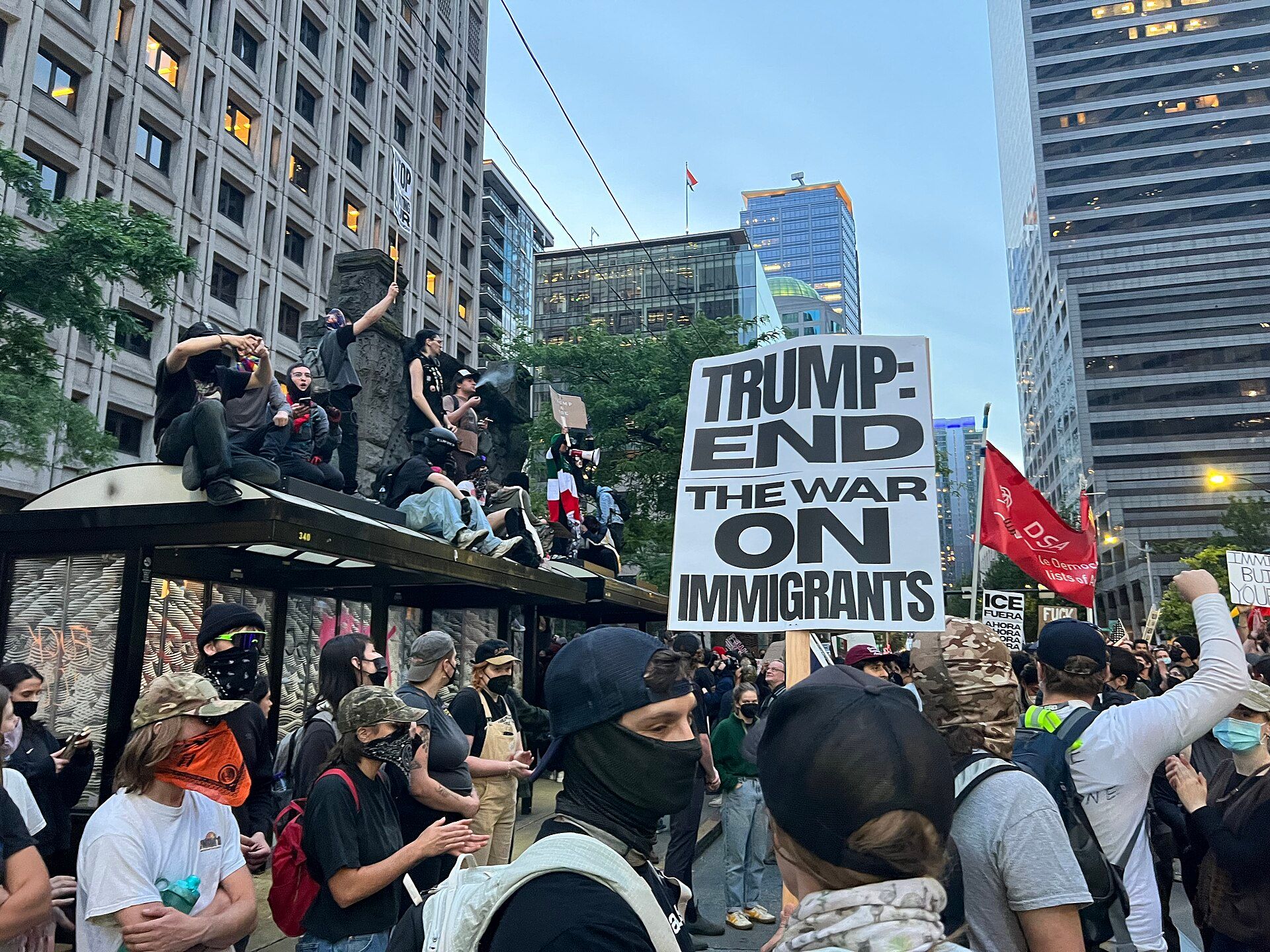
A major Trump administration immigration policy takes effect today, September 18, and for immigrant families across Washington, one of its most immediate consequences may be fear.
The administration has rescinded the Biden-era regulations governing the federal government’s “public charge” test, dramatically expanding the discretion immigration officers have when determining whether certain people seeking admission to the United States or permanent residency could become dependent on government assistance.
The change applies to applications for admission made on or after September 18 and adjustment-of-status applications postmarked or electronically submitted beginning today.
And here in Washington, the consequences could reach far beyond an immigration office.
Washington’s Health Care Authority is warning residents that the new policy expands the kinds of government benefits immigration officials may consider, including non-emergency Medicaid such as Apple Health.
But even explaining exactly who should be worried is complicated.
Most Apple Health coverage will not automatically make someone a “public charge.” Refugees and some other immigration categories are exempt from the test. Emergency Medical is excluded. And immigration officials are still supposed to evaluate cases individually under what the government calls the “totality of the circumstances.”
That nuance matters.
Because when immigration policy becomes confusing enough that families cannot easily determine whether going to the doctor, receiving food assistance or accepting another government benefit could jeopardize their future in the United States, fear itself becomes consequential.
Seattle’s own public-charge webpage acknowledges that federal policy changed today but, as of publication, says the page “will be updated” and directs residents elsewhere for additional information.
Seattle and King County aren’t simply watching from the sidelines.
They joined New York City, Chicago, San Francisco and Santa Clara County this week in a lawsuit challenging the Trump administration’s rule.
King County Executive Girmay Zahilay says potentially several thousand King County residents could be affected.
The coalition behind the lawsuit argues that the administration has removed meaningful guardrails and created a system capable of producing inconsistent decisions. Local officials also warn of a “chilling effect,” where immigrants who may be legally entitled to benefits, including people who aren’t even subject to the public-charge test, avoid assistance because they fear immigration consequences.
That possibility deserves particular scrutiny in the context of the Trump administration’s much broader immigration crackdown.
Is this simply about determining who might become dependent on government assistance, as the administration argues?
Or does a deliberately broader and less predictable system create another pressure point capable of making immigrant communities afraid to interact with government institutions at all?
Those are different claims, and the evidence matters.
The Trump administration says the purpose of the change is to restore congressional intent and ensure immigrants are “self-reliant and not dependent on taxpayer-funded government benefits.”
USCIS says the previous Biden administration rule prevented officers from considering relevant information and that the new policy allows officials to examine each applicant individually.
Opponents see something very different.
Seattle Mayor Katie Wilson accused the administration of using “discrimination and fear” to discourage immigrant families from accessing services they’re legally entitled to receive.
King County Prosecuting Attorney Leesa Manion described the policy as targeting immigrants who are legally establishing their status while working, paying taxes and participating in their communities.
And Seattle City Councilmember Alexis Mercedes Rinck explicitly connected the public-charge policy to the administration’s broader mass-deportation agenda.
Those accusations cannot simply be converted into proof that the administration created the rule specifically to identify people for deportation.
But they raise an important question about what happens when immigration enforcement and basic government services increasingly occupy the same psychological space.
Someone doesn’t necessarily need to receive a deportation notice to change their behavior.
They simply need to believe that giving the government information, visiting a clinic, applying for food assistance or asking for help could someday be used against them.
That is the chilling effect local governments say they’re trying to prevent.
And Washington’s government is now tasked with explaining a federal policy complicated enough that even state agencies are publishing detailed guidance about which programs count, which don’t, who is exempt and when someone should speak with an immigration attorney.
For families living inside that uncertainty, this isn’t an abstract fight between the Trump administration and Democratic-led cities.
It’s a much simpler calculation:
Do I get the help my family needs today, or could accepting that help threaten my ability to remain here tomorrow?
The Trump administration says the new rule is about self-reliance.
Seattle and King County say it is about fear.
Beginning today, immigrant families across Washington are the ones forced to navigate the space between those two claims.
Sources: U.S. Department of Homeland Security/USCIS final public-charge rule and USCIS announcement; Washington State Health Care Authority; City of Seattle Office of Immigrant and Refugee Affairs; King County Executive’s Office and the Seattle/King County lawsuit challenging the rule.