We Already Found the Money. We Just Spent It on the Wrong Things.
Every time someone brings up the Green New Deal, the first response is the same: how are you going to pay for that?
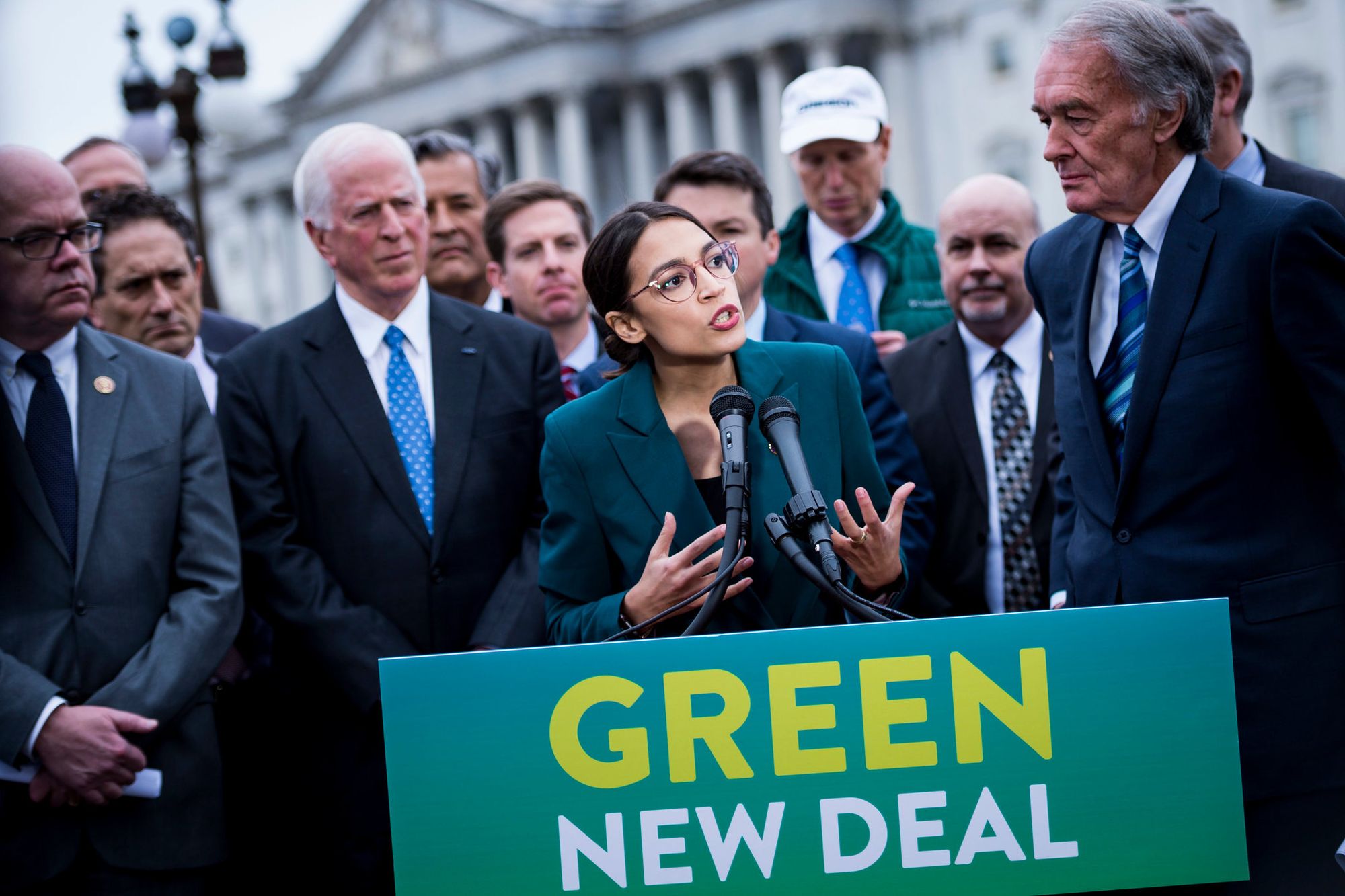
It's a fair question. It's also one our government answers for itself every single year — just never in the direction of clean energy, good jobs, or working families. Let's look at where the money is actually going right now.
The Pentagon Just Crossed $1 Trillion
Congress landed on a base defense budget of roughly $866.6 billion for FY2026, and when you add the extra $150 billion tucked into the "One Big Beautiful Bill," total defense discretionary spending for the year hits more than $1 trillion — a jump of over 17 percent in a single year. And that's the appetizer. The White House has already floated a $1.5 trillion request for FY2027, which the administration itself compares to the buildup before World War II.
That's not "keeping America safe." That's a number so large it's genuinely hard to picture — and it went through with barely a fight.
Then There's the Tax Cuts
The "One Big Beautiful Bill" didn't just pad the Pentagon. The Congressional Budget Office found it will add $3.4 trillion to the deficit over ten years — more than $4 trillion once you count the interest — mostly by making the 2017 Trump tax cuts permanent. Some independent analysts, accounting for provisions set to sunset early, put the true tax-cut price tag closer to $5.2 trillion in lost revenue before economic feedback is even factored in.
Who benefits? The richest 10 percent of Americans are getting the overwhelming majority of it. Center for American Progress crunched the CBO numbers and found the top 1 percent alone is pocketing roughly $1 trillion in tax cuts, cushioned in part by cuts of over $1.1 trillion to SNAP, Medicaid, and other programs poor and working families rely on. The average household in the top one percent nets over $50,000 a year from this bill. That's not tax relief. That's a wealth transfer, upward, on autopilot.
And We're Still Subsidizing Oil and Gas
On top of all that, the federal government hands the fossil fuel industry an estimated $34.8 billion a year in direct handouts — tax breaks, cut-rate access to drilling on public land, and cleanup costs the industry should be covering itself. This year's spending bill piled on roughly $40 billion in new fossil fuel subsidies, on top of the $30.8 billion a year already baked in. We're not talking about a struggling industry that needs a leg up — Exxon and Chevron posted record profits this decade. We're talking about corporate welfare, full stop.
So What Would the Green New Deal Actually Cost?
Here's where the debate usually gets dishonest. Conservative think tanks like American Action Forum love to quote numbers as high as $93 trillion — but that figure bundles in universal health care, a federal jobs guarantee, and a total housing retrofit, all stacked on top of the actual clean energy transition. Even the report's own author admitted the number is "not wrong, but incomplete."
If you isolate just the energy transition — decarbonizing the grid and transportation — economists land somewhere far more modest. UMass economist Robert Pollin estimates we could hit net-zero emissions by spending about 2 percent of GDP a year, roughly $18 trillion total spread across three decades — and he notes that's "real money," but entirely feasible when spread out, with real economic benefits along the way. That's around $600 billion a year. Less than what we're currently spending on the Pentagon alone. Less than what we just handed the top 10 percent in tax cuts.
The Math Isn't the Obstacle. The Priorities Are.
Put it side by side:
Military budget increase in one year: over $150 billion, on top of a trillion-dollar baseline
Tax cuts for the wealthy, per year: hundreds of billions, disproportionately to people who don't need it
Fossil fuel subsidies: roughly $35 billion a year, propping up an industry already swimming in profit
Estimated annual cost of a serious clean energy transition: around $600 billion
We are not a poor country having an honest conversation about scarcity. We are a rich country that has already decided, again and again, what it's willing to spend trillions on — and it isn't us.
The next time someone tells you the Green New Deal is unaffordable, ask them why the Pentagon's budget increase alone could nearly cover it. Ask them why the tax cuts for the top 1 percent cost more than transitioning the grid would. The money was never the problem. The priorities were.
Have an awesome day folks!
-Sean
Want more like this? Full analysis and progressive coverage at SeanBartley.substack.com — and if you want the deep dives that don't fit anywhere else, become a paid subscriber to The Thread Count.