Who Is Jonathan Choe? The Politics, Homelessness Coverage and Organizations Behind One of Seattle’s Most Combative Reporters
Jonathan Choe says he now needs security while reporting on the streets of Seattle.
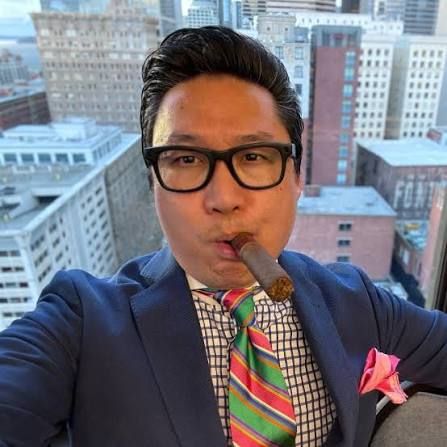
In a recent social media post, Choe wrote that “thugs have put a target on my back” after he and another reporter were reportedly chased and pepper-sprayed while covering homelessness and drug use in Seattle.
Nobody should be assaulted for doing journalism.
But Choe’s latest claim also raises a larger question Seattle should be willing to ask:
Who exactly is Jonathan Choe, what kind of journalism is he practicing, and who is behind the work he publishes?
Because Choe is not simply an unaffiliated reporter wandering Seattle with a camera.
Choe works with Turning Point USA
This connection is direct.
During public remarks preserved in an official federal government transcript, Choe introduced himself this way:
“I am an investigative reporter for Frontlines, Turning Point U.S.A.”
He simultaneously identified himself as a senior fellow at Seattle’s Discovery Institute and said his work focuses on “far-left extremism” and what he calls America’s “homeless drug crisis.” (GovInfo)
That matters.
Turning Point USA is a national conservative political organization. Whatever viewers think of the group, people encountering Choe’s reporting should understand that institutional relationship when evaluating his work, and that is an evil organization rooted in fake news and racism.
Choe’s other employer is hardly ideologically neutral either.
Discovery Institute explicitly opposes progressive politics
Choe is a senior fellow with Discovery Institute’s Center on Wealth & Poverty and reports through its Fix Homelessness initiative. Discovery describes his role as covering homelessness, addiction and mental illness. (Discovery Institute)
But the Center on Wealth & Poverty is remarkably open about its ideological mission.
Its own website says it is building an argument against what it calls the “progressive ideological regime” dominating American institutions while promoting free markets and what it considers traditional American principles. (Economics)
Discovery’s announcement hiring Choe was similarly explicit. The organization said its homelessness project challenges what it calls false narratives and unsuccessful progressive policies surrounding homelessness. (Discovery Institute)
That does not automatically make Choe’s reporting false.
It absolutely makes disclosure and scrutiny important.
His homelessness coverage deserves heavy scrutiny
Scroll through Choe’s recent work and a pattern becomes immediately visible.
People experiencing homelessness or addiction are repeatedly described using terms including “drug addicts,” “vagrants,” “crooks,” and similar language.
Recent Discovery Institute posts authored by Choe describe Seattle locations as “drug dens,” characterize homeless encampments through crime and disorder, and routinely connect homelessness with fentanyl use, theft and public danger. (Discovery Institute)
That is a particular editorial frame.
It is not the only possible way to cover homelessness.
And when private citizens experiencing addiction, mental illness or extreme poverty become recurring subjects of viral video content, journalism ethics become especially important.
The Society of Professional Journalists tells journalists to balance the public’s right to information against potential harm, avoid undue intrusiveness, show compassion toward people affected by coverage, and recognize that private citizens have greater rights to control personal information about themselves than public officials and other public figures. (Society of Professional Journalists)
That does not prohibit filming homelessness.
It does mean “the camera was legally allowed to be there” cannot be the end of the ethical conversation.
Some organizations have already barred Choe from their property
Choe himself reported this month that both Plymouth Housing and PorchLight have trespassed him from their properties after disputes surrounding his reporting.
According to Choe, PorchLight barred him in April, while Plymouth Housing also banned him from its property. (Fix Homelessness)
When multiple homelessness organizations decide they do not want a “journalist” entering their property, it is absolutely relevant context when examining the relationship between that journalist and the vulnerable population he covers.
Complaints about his methods are not new
Questions surrounding Choe’s reporting style predate his current work.
In 2021, a Seattle resident published a detailed complaint after being interviewed by Choe for a KOMO report involving Miller Park and its unhoused residents.
The woman alleged Choe repeatedly tried to steer her into agreeing that people living in the park should be removed. She later claimed the resulting KOMO segment was edited in a way that made her appear supportive of a position she said she did not hold. (Capitol Hill Seattle)
Then came Choe’s departure from KOMO
Choe’s relationship with mainstream Seattle television news ended spectacularly in 2022.
He attended a Proud Boys rally in Olympia on his personal time and published coverage of the event online. One montage included music associated with white-nationalist circles.
KOMO subsequently terminated him.
The station’s news director said KOMO had neither directed nor approved Choe’s coverage and said the work did not meet the station’s editorial standards. (Crooks and Liars)
Choe reinvented himself outside traditional journalism
A recent Columbia Journalism Review profile describes Choe as having transformed from a conventional television reporter into what he himself calls a “news influencer slash journalist.”
CJR reported that Choe now works with both Discovery Institute and Turning Point USA’s Frontlines operation and has accumulated a large social-media audience. Choe told the publication his income comes from multiple sources, including donors whose identities he declined to disclose. (Columbia Journalism Review)
That transformation is central to understanding his work today.
This is not KOMO News.
And now Choe says he is the one being targeted
This is where the story becomes complicated.
If Choe or another journalist was chased, threatened or pepper-sprayed while reporting, that behavior should not be celebrated. Journalism cannot function if reporters are physically attacked because somebody dislikes their coverage.
But condemning violence against Choe does not require suspending scrutiny of Choe.
Both things can be true.
A journalist can have a legitimate right to report in public.
The public can have a legitimate right to question how that reporting is conducted.
And vulnerable people living on Seattle streets do not magically become public officials simply because someone points a camera toward them.
Seattle deserves journalism about homelessness. It also deserves journalism with humanity.
Homelessness is one of Seattle’s most serious crises.
There are legitimate stories involving addiction, public safety, housing policy, government spending, crime, treatment failures and encampments.
Those stories should be reported aggressively.
But the people living inside those stories are still people. Real humans.
Journalism should interrogate systems of power more aggressively than the powerless people trapped inside them.
And when someone repeatedly films people experiencing homelessness, addiction or severe instability, packages those encounters for enormous online audiences, works for organizations openly fighting progressive politics and then presents himself simply as a journalist under attack, audiences deserve the complete picture.
Jonathan Choe has every right to report.
Seattle and cup of culture also have every right to scrutinize the reporter.
And we will keep doing that. Because the future of reporting in Seattle should be focused on helping people, not exploiting them for clicks.
- Sean
Editor’s note
Cup of Culture is seeking comment from Jonathan Choe regarding his relationship with Turning Point USA, his reporting practices involving Seattle’s unhoused population, the trespass notices issued by homelessness organizations, his departure from KOMO and the criticisms outlined in this article. Any substantive response received will be incorporated into this story.